How to Read a Credit Report (2026 Complete Guide)
Table of Contents
- What Is a Credit Report?
- Why Understanding Your Credit Report Matters
- Personal Information Section
- Credit Accounts Section
- Payment History Section
- Credit Inquiries Section
- Public Records & Collections
- Common Credit Report Errors
- How to Dispute Errors
- Frequently Asked Questions
- Final Thoughts
What Is a Credit Report?
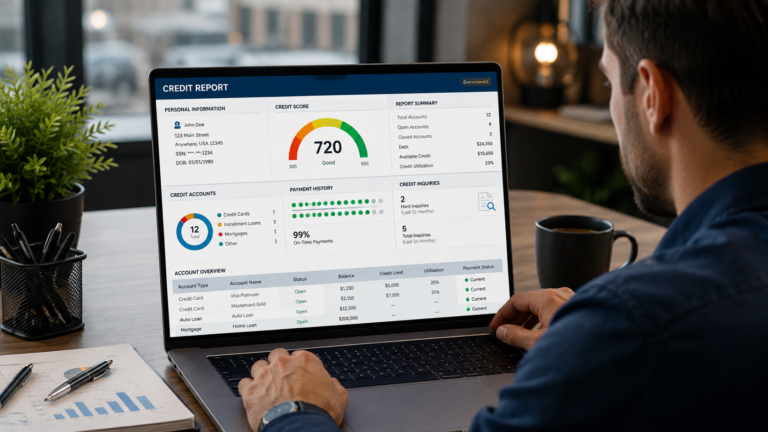
A credit report is one of the most important financial documents you’ll ever have. It contains a detailed record of how you’ve managed credit over time and is used by banks, lenders, landlords, insurance companies, and sometimes even employers to evaluate your financial reliability.
Many people confuse a credit report with a credit score, but they’re not the same thing.
Think of your credit report as your complete financial history, while your credit score is simply a number calculated from the information inside that report.
Your credit report includes details such as:
- Personal identification information
- Credit cards and loan accounts
- Payment history
- Current balances
- Credit limits
- Hard inquiries
- Public records (when applicable)
Understanding how to read each section allows you to identify mistakes, protect yourself from identity theft, and improve your overall financial health.
Why Understanding Your Credit Report Matters
Your credit report directly affects many important financial decisions throughout your life.
A lender may review your report before approving:
- A mortgage
- An auto loan
- A personal loan
- A new credit card
- A business loan
Landlords may also review your credit report before renting an apartment, while some insurance companies use credit-based information when calculating premiums.
If your report contains inaccurate information, it could lead to:
- Loan rejections
- Higher interest rates
- Lower credit limits
- Difficulty renting a home
- Delays in financial approvals
By reviewing your credit report regularly, you can catch errors early, dispute incorrect information, and ensure your credit profile accurately reflects your financial behavior.
Personal Information Section
The Personal Information section appears at the top of your credit report. While it doesn’t directly affect your credit score, it’s one of the first areas you should review because mistakes here can indicate identity theft or reporting errors.
This section typically includes:
- Full legal name
- Previous names or aliases
- Current and previous addresses
- Date of birth
- Social Security Number (partially masked)
- Phone numbers
- Employment information (if reported)
Why This Section Matters
Incorrect personal information can cause your credit file to be mixed with someone else’s or make it easier for fraudulent accounts to appear on your report.
When reviewing this section, ask yourself:
- Is my name spelled correctly?
- Do I recognize every listed address?
- Is my date of birth accurate?
- Are there unknown employers listed?
- Does the last four digits of my Social Security Number match?
If you notice unfamiliar information, contact the credit bureau immediately and request a correction.
Although personal information doesn’t change your credit score directly, keeping it accurate helps ensure that the rest of your credit report belongs only to you.
Credit Accounts Section
The Credit Accounts section is one of the most important parts of your credit report because it contains the complete history of your borrowing activity.
Every credit card, mortgage, auto loan, personal loan, or student loan you’ve opened may appear here.
For each account, you’ll usually see:
- Name of the lender
- Account type
- Date opened
- Credit limit or loan amount
- Current balance
- Payment status
- Account status (Open or Closed)
- Monthly payment
- Payment history
Why This Section Is Important
Credit scoring models analyze these accounts to understand how responsibly you’ve managed borrowed money over time.
For example, lenders look at:
- Whether you pay on time.
- How much of your available credit you’re using.
- How old your accounts are.
- Whether accounts are open or closed.
- The variety of credit accounts you have.
When reviewing your accounts, look for:
 Unknown credit cards
Loans you never applied for
Incorrect balances
Wrong payment status
Duplicate accounts
Even a single reporting error can lower your credit score or reduce your chances of loan approval.
Payment History Section
If there’s one section that deserves your full attention, it’s Payment History.
This is generally considered the most influential factor in determining your credit score.
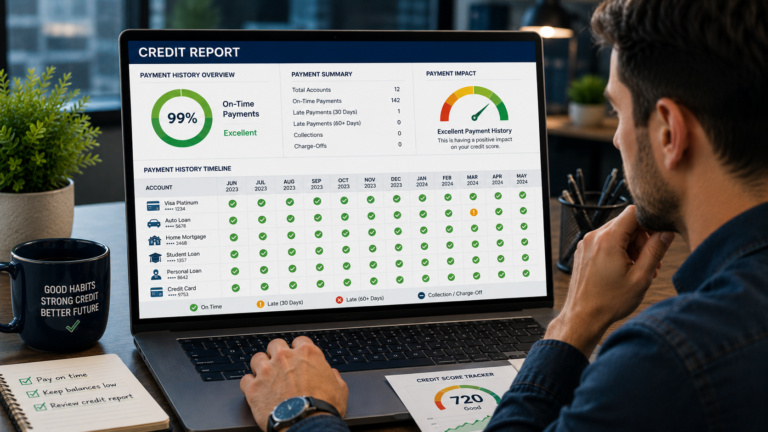
The payment history section records whether you’ve paid your credit obligations on time.
It may include:
- On-time payments
- Late payments (30, 60, or 90+ days)
- Missed payments
- Collections
- Charge-offs
- Delinquencies
A strong payment history demonstrates financial responsibility, while repeated late payments can remain on your credit report for years and negatively affect your ability to qualify for future credit.
What to Check
When reviewing this section, make sure:
- Every reported payment is accurate.
- There are no late payments you don’t recognize.
- Paid accounts aren’t still marked as overdue.
- Collection accounts have been reported correctly.
If you find inaccurate payment information, dispute it with the appropriate credit bureau as soon as possible.
Credit Inquiries Section
Every time you apply for new credit, a lender may review your credit report. These checks appear in the Credit Inquiries section.
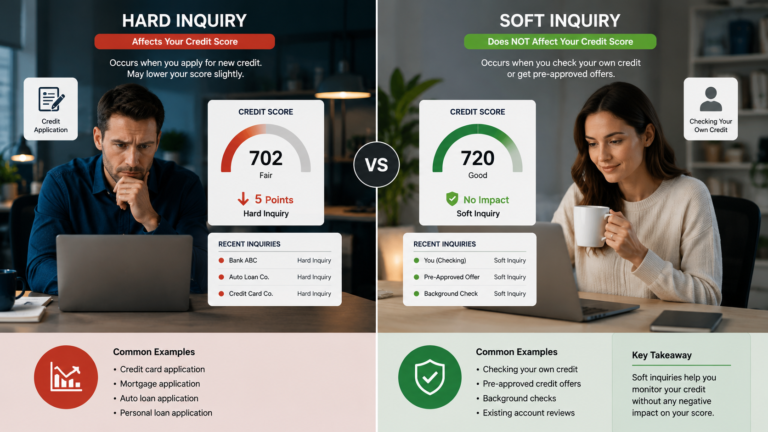
There are two types of credit inquiries, and understanding the difference is essential.
Hard Inquiries
A hard inquiry occurs when you apply for new credit, such as:
- A credit card
- A mortgage
- An auto loan
- A personal loan
Hard inquiries may temporarily lower your credit score by a few points. However, a single inquiry usually has only a small impact. The real concern is submitting multiple credit applications within a short period, as this can make lenders think you’re taking on too much new debt.
Soft Inquiries
A soft inquiry happens when:
- You check your own credit report.
- A company pre-approves you for an offer.
- An employer performs a background credit check (where permitted).
- A lender performs a prequalification.
Soft inquiries do not affect your credit score and are visible only to you.
What Should You Check?
Review every hard inquiry carefully.
Ask yourself:
- Did I authorize this application?
- Do I recognize the lender?
- Is the inquiry date correct?
If you notice a hard inquiry you don’t recognize, it could be a sign of identity theft. Contact the lender and the credit bureau immediately.
Public Records and Collection Accounts
Another important section of your credit report contains public records and collection accounts.
Although public records appear less frequently on modern credit reports than they once did, collection accounts can still have a significant impact on your credit profile.
Examples include:
- Debt collection accounts
- Unpaid medical collections (depending on reporting rules)
- Court-related financial judgments (when applicable under current reporting practices)
These entries can signal financial difficulties to future lenders.
What to Review
Carefully examine each collection account.
Verify:
- The creditor’s name.
- The balance.
- The account status.
- The reporting date.
- Whether the debt actually belongs to you.
Sometimes collection accounts remain on a report even after they’ve been resolved or may contain incorrect information.
If something looks inaccurate, dispute it with the appropriate credit bureau.
Why This Section Matters
Collection accounts may:
- Lower your credit score.
- Reduce your chances of loan approval.
- Increase interest rates.
- Affect mortgage and auto loan applications.
The sooner reporting errors are corrected, the better your long-term credit health will be.
Common Credit Report Errors to Watch For
Millions of consumers discover mistakes on their credit reports every year.
Even a small reporting error can affect your credit score and your ability to qualify for loans.
Some of the most common errors include:
- Incorrect personal information.
- Accounts that don’t belong to you.
- Duplicate loan accounts.
- Incorrect account balances.
- Wrong payment history.
- Accounts reported as open after being closed.
- Incorrect late payments.
- Fraudulent hard inquiries.
- Identity theft-related accounts.
Quick Credit Report Review Checklist
Whenever you review your credit report, ask yourself:
Is all my personal information correct?
Do I recognize every account?
Are balances accurate?
Are all payments reported correctly?
Are there any unknown hard inquiries?
Are closed accounts marked correctly?
Are there any duplicate accounts?
Following this checklist every few months can help you catch errors before they become expensive financial problems.o
How to Dispute Errors on Your Credit Report
Finding an error on your credit report can be frustrating, but the good news is that you have the right to dispute inaccurate information. Correcting mistakes can improve your credit profile and may even increase your credit score over time.
Step 1: Identify the Error
Before filing a dispute, carefully review the information and determine exactly what’s incorrect.
Examples include:
- Incorrect personal information
- Accounts that don’t belong to you
- Wrong account balances
- Duplicate accounts
- Incorrect late payments
- Fraudulent hard inquiries
- Closed accounts still reported as open
Take screenshots or save copies of your credit report for your records.
Step 2: Gather Supporting Documents
Evidence makes your dispute stronger.
Useful documents include:
- Bank statements
- Credit card statements
- Payment confirmations
- Loan payoff letters
- Identity documents
- Correspondence from lenders
The more evidence you provide, the easier it is for the credit bureau to investigate your claim.
Step 3: Contact the Credit Bureau
If the error appears on your Experian, Equifax, or TransUnion report, submit a dispute directly to the bureau reporting the incorrect information.
Include:
- Your personal details
- Description of the error
- Copies of supporting documents
- The correction you’re requesting
Most disputes can be submitted online, by mail, or over the phone.
Step 4: Monitor the Investigation
After receiving your dispute, the credit bureau will investigate the issue by contacting the lender that reported the information.
If the lender cannot verify the information or confirms it’s inaccurate, the credit bureau will update or remove the incorrect entry.
Always review your updated credit report after the investigation is complete.
Best Practices for Maintaining an Accurate Credit Report
Reading your credit report once isn’t enough.
Financial experts recommend reviewing your reports regularly to catch mistakes early and protect yourself against identity theft.
Follow These Best Practices
 Review your credit reports several times each year.
Check every new account carefully.
Monitor hard inquiries.
Keep personal information updated.
Save payment confirmations.
Monitor credit utilization.
Report suspicious activity immediately.
Keep old accounts open whenever appropriate.
Avoid applying for unnecessary credit.
Check your reports before applying for major loans.
These simple habits help keep your credit report accurate and reduce the risk of unpleasant surprises when applying for credit.
Frequently Asked Questions
How often should I check my credit report?
Most financial experts recommend reviewing your credit report several times a year and always before applying for a mortgage, auto loan, or new credit card.
Does checking my own credit report hurt my credit score?
No.
Checking your own credit report creates a soft inquiry, which does not affect your credit score.
Why are my credit reports different?
Not every lender reports to all three credit bureaus. Because Experian, Equifax, and TransUnion receive information independently, small differences between reports are common.
How long do negative items stay on a credit report?
The length varies depending on the type of information. Different negative items have different reporting periods under applicable credit reporting rules.
Can I remove accurate negative information?
Generally, accurate information cannot simply be removed because it’s unfavorable. However, incorrect information should be disputed, and some negative items naturally expire after their reporting period ends.
Final Thoughts
Learning how to read a credit report is one of the most valuable financial skills you can develop.
Your credit report tells the story behind your credit score. By understanding every section—from personal information and credit accounts to payment history and inquiries—you can identify mistakes, protect yourself from fraud, and make smarter borrowing decisions.
Don’t wait until you’re applying for a mortgage or car loan to review your report.
Instead, make checking your credit report a regular financial habit. A few minutes of review today could save you thousands of dollars in higher interest rates tomorrow.
Key Takeaways
A credit report is different from a credit score.
Review your personal information for accuracy.
Check every credit account carefully.
Verify payment history and account balances.
Understand the difference between hard and soft inquiries.
Watch for collection accounts and reporting errors.
Dispute inaccurate information promptly.
Review your credit report regularly to protect your financial health.