
How Is a Credit Score Calculated in USA?
- July 16, 2026
- tawebdevelopers
- 10:21 am
Table of Contents
- Introduction
- What Does a Credit Score Measure?
- Who Calculates Credit Scores?
- FICO vs VantageScore
- Five Main Credit Score Factors
- FAQs
- Conclusion
- Five Main Credit Score Factors
- FAQs
- Conclusion
Introduction
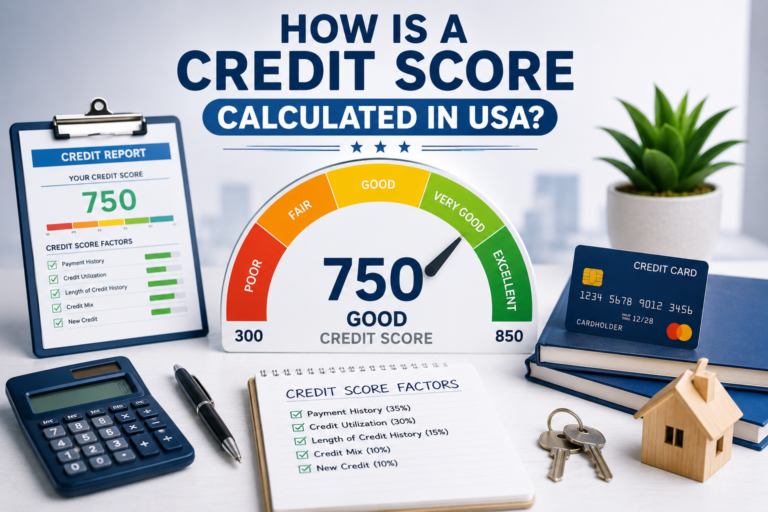
If you’ve ever checked your credit score, you may have wondered how that three-digit number is actually calculated. Understanding the process can help you make smarter financial decisions and identify the habits that have the greatest impact on your score..How is a credit score calculated in USA
Your credit score is not chosen randomly. It is calculated FICO Score using information from your credit report and evaluated through credit scoring models developed to predict how responsibly someone is likely to manage borrowed money.
If you’re new to the topic, we recommend reading our What Is a Credit Score in USA? Beginner’s Guide before continuing, What affects your credit score as it explains the fundamentals of credit scores and why they matter.
Whether you’re planning to apply for a credit card, an auto loan, or a mortgage, understanding how your score is calculated can help you build healthier financial habits over time.
Quick Summary
Credit scores are calculated using information in your credit report.
Different scoring models exist, including FICO® Score and VantageScore.
Payment history and credit utilization are generally among the most influential factors.
Healthy credit habits can improve your score over time.
2026 Credit Score Calculation Update
Although FICO® and VantageScore continue using similar scoring models, lenders in 2026 are placing greater emphasis on responsible payment history, lower credit utilization, longer credit history, and healthy credit management habits.
Understanding how a credit score is calculated in USA helps consumers make smarter financial decisions before applying for mortgages, auto loans, or credit cards.
What Does a Credit Score Measure?
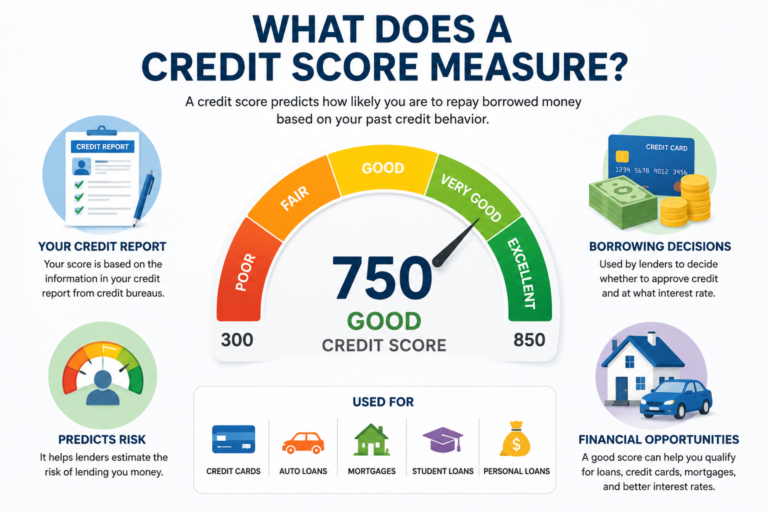
A credit score is designed to estimate how likely you are to repay borrowed money based on your previous credit behavior. Instead of evaluating your personality or income, it analyzes patterns in your credit history.
Lenders use this information as one factor when deciding whether to approve applications for financial products such as:
- Credit cards
- Personal loans
- Auto loans
- Mortgages
- Lines of credit
A higher credit score generally indicates lower lending risk, while a lower score may suggest that additional review is needed before credit is approved.
It’s important to understand that a credit score is only one part of the decision-making process. Many lenders also consider factors such as income, employment history, existing debt, and overall financial stability.
Who Calculates Credit Scores?
Many people assume that banks calculate credit scores, but that is not how the system works.
Credit scores are created using scoring models that analyze information from your credit reports. Financial institutions then use those scores as part of their lending decisions.
Two of the most widely recognized scoring models in the United States are:
- FICO® Score
- VantageScore®
- Although these models use similar information, they may weigh certain factors differently. This is one reason why your credit score can vary slightly depending on where you check it.
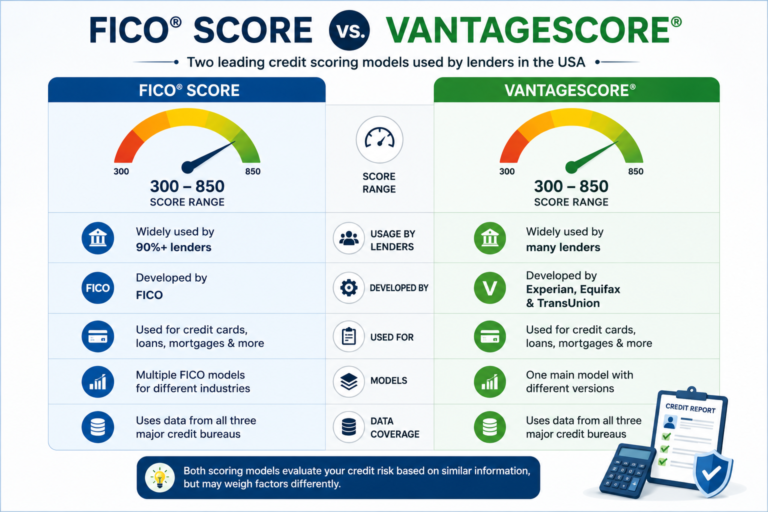
FICO® Score vs. VantageScore®
Both scoring models are designed to predict credit risk, but they use different algorithms and may calculate scores in slightly different ways.
| Feature | FICO® Score | VantageScore® |
|---|---|---|
| Widely Used by Lenders | Yes | Yes |
| Score Range | 300–850 | 300–850 |
| Based on Credit Report | Yes | Yes |
| Used for Lending Decisions | Yes | Yes |
For most consumers, maintaining healthy financial habits is more important than focusing on the differences between scoring models.
| Credit Score Factor | FICO Weight | Importance |
|---|---|---|
| Payment History | 35% | Very High |
| Credit Utilization | 30% | High |
| Credit History Length | 15% | Medium |
| Credit Mix | 10% | Medium |
| New Credit | 10% | Medium |
The Five Main Factors That Affect Your Credit Score
Understanding the five primary factors behind your credit score is essential if you want to build and maintain strong credit. While the exact formulas used by credit scoring models are proprietary, both FICO® and VantageScore® evaluate similar types of information from your credit report.
Let’s look at each factor individually.
1. Payment History (Most Important)
Payment history is generally considered the most influential factor in your credit score. It reflects whether you’ve consistently paid your bills on time.
Late or missed payments can remain on your credit report for several years and may negatively affect your credit profile. On the other hand, making payments on time demonstrates responsible borrowing behavior.
Lenders often view a strong payment history as a positive sign that you’re likely to repay future debts responsibly.
Best Practices
Pay every bill before its due date.
Set up automatic payments whenever possible.
Monitor your payment history regularly.
Contact your lender immediately if you’re unable to make a payment on time.
Want to improve your credit habits? Read our What Is a Credit Score in USA? Beginner’s Guide to understand why payment history matters.

2. Credit Utilization Ratio
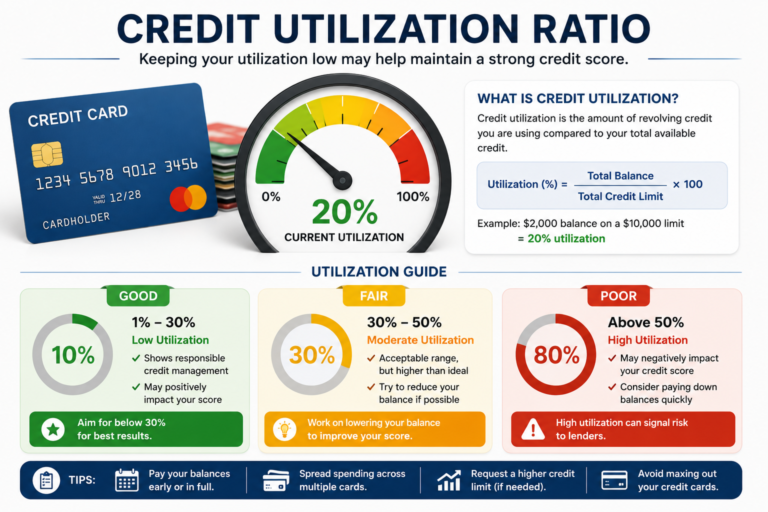
Credit utilization measures how much of your available revolving credit you’re currently using.
For example:
If your credit card limit is $10,000 and your balance is $2,000, your utilization ratio is 20%.
Many financial experts suggest keeping utilization below 30%, although lower utilization may be viewed more favorably.
High utilization can signal increased borrowing risk, even if you always make payments on time.
Example
| Credit Limit | Balance | Utilization |
|---|---|---|
| $5,000 | $500 | 10% |
| $5,000 | $1,500 | 30% |
| $5,000 | $4,000 | 80% |
Tips to Maintain Low Utilization
- Pay credit card balances early.
- Avoid maxing out credit cards.
- Spread spending across multiple cards if appropriate.
- Request a higher credit limit only when it aligns with your financial situation.
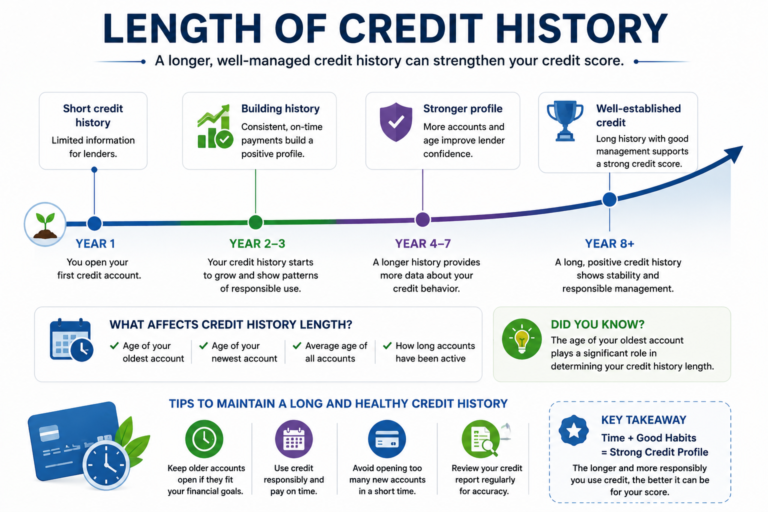
3. Length of Credit History
The length of your credit history reflects how long you’ve been using credit.
This includes:
- Age of your oldest account
- Age of your newest account
- Average age of all accounts
A longer and well-managed credit history provides lenders with more information about your borrowing habits.
Because of this, it’s often beneficial to keep older accounts open if they fit your financial situation.
However, decisions about closing accounts should also consider fees, usage, and your overall financial goals.
Key Takeaways
Payment history is one of the most influential credit score factors.
 Keeping credit utilization low is generally recommended.
A longer credit history can strengthen your credit profile.
Responsible borrowing habits matter more than quick fixes.
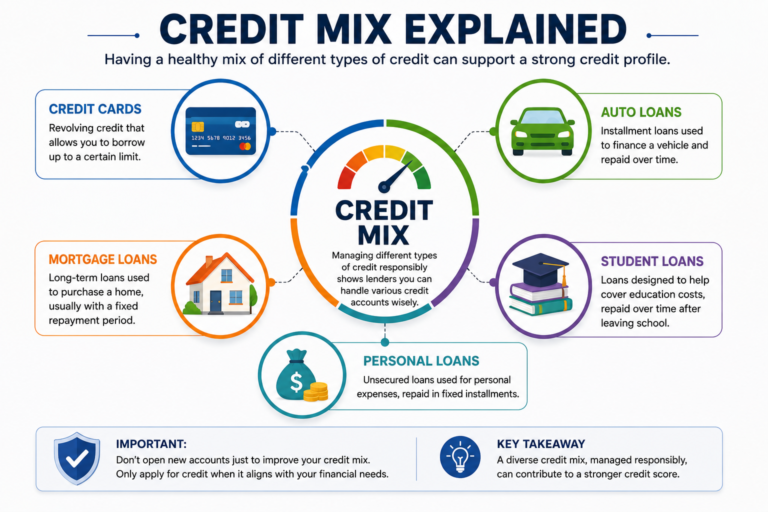
4. Credit Mix
Another factor that can influence your credit score is your credit mix. This refers to the variety of credit accounts you manage.
A healthy credit mix may include different types of accounts, such as:
- Credit Cards
- Auto Loans
- Mortgage Loans
- Student Loans
- Personal Loans
Having multiple types of credit does not automatically increase your credit score. Instead, credit scoring models generally look at whether you’ve managed different types of credit responsibly over time.
For example, someone who has successfully managed a credit card and an auto loan for several years may demonstrate a broader credit history than someone with only one type of account.
Important: Never open new credit accounts solely to improve your credit mix. Only apply for credit when it aligns with your financial needs.
5. New Credit Applications
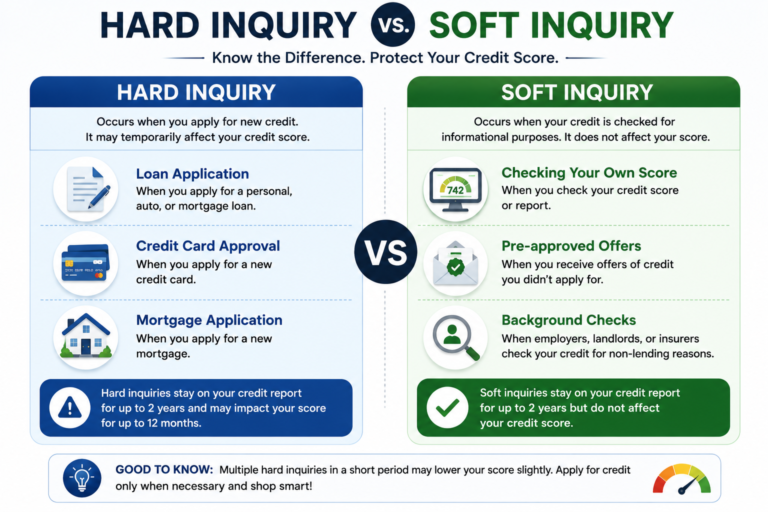
Whenever you apply for new credit, the lender may review your credit report.
This review is known as a hard inquiry.
Applying for several credit accounts within a short period can sometimes lower your credit score temporarily because it may indicate increased borrowing activity.
However, one or two applications over time are generally not a major concern.
It’s often better to apply for credit only when necessary rather than submitting multiple applications at once.
Hard Inquiry vs Soft Inquiry
Many beginners confuse these two terms.
| Hard Inquiry | Soft Inquiry |
|---|---|
| May affect your credit score | Does not affect your credit score |
| Happens when applying for new credit | Happens when checking your own credit or during pre-approvals |
| Visible to lenders | Usually visible only to you |
Checking your own credit score is considered a soft inquiry and generally does not reduce your score.
Common Credit Score Myths
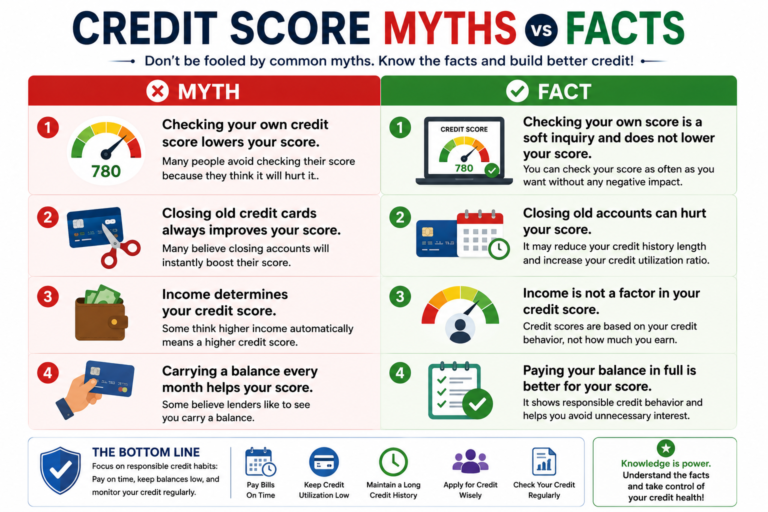
There are many misconceptions about how credit scores work. Believing these myths can lead to poor financial decisions.
Myth #1
Checking your own credit score lowers your score.
Fact: Checking your own score is a soft inquiry and generally does not affect your credit score.
Myth #2
Closing old credit cards always improves your score.
Fact: Closing older accounts may reduce your average credit history and can increase your credit utilization ratio, depending on your situation.
Myth #3
Income determines your credit score.
Fact: Income is generally not a direct factor in standard credit scoring models. Your payment history and credit behavior are much more influential.
Myth #4
Carrying a balance every month helps your score.
Fact: Paying your balance responsibly is generally better than carrying unnecessary debt.
Quick Recap
By now, you’ve learned that your credit score is generally influenced by:
- Payment History
- Credit Utilization
- Length of Credit History
- Credit Mix
- Ne w Credit Applications These factors work together to create an overall picture of your credit management habits.
If you’re still learning the basics, our What Is a Credit Score in USA? Beginner’s Guide explains why credit scores matter and how they’re used.
How to Improve Your Credit Score
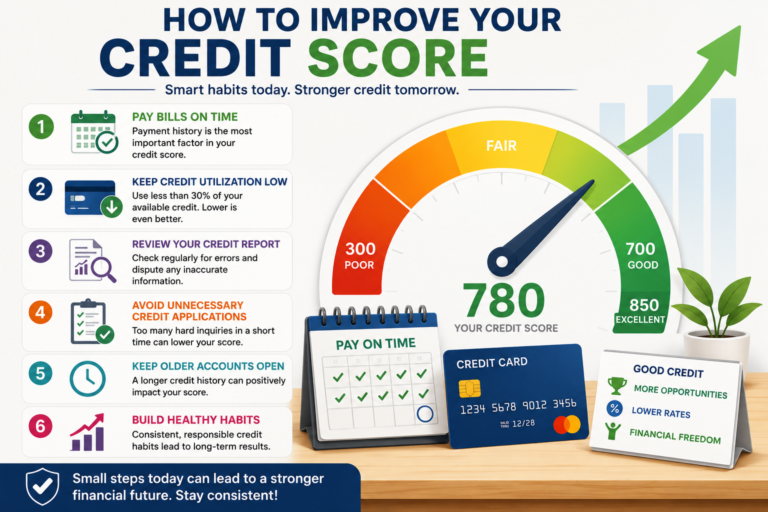
Now that you understand how a credit score is calculated, the next step is improving it through responsible financial habits. While there is no instant solution, consistent actions can strengthen your credit profile over time.
Here are some practical strategies that may help:
1. Pay Every Bill on Time
Your payment history is one of the most important factors affecting your credit score. Setting up automatic payments or calendar reminders can help you avoid missed due dates.
2. Keep Credit Utilization Low
Try to keep your credit card balances well below your available credit limit. Lower utilization generally reflects responsible credit management.
3. Review Your Credit Report Regularly
Checking your credit report allows you to identify errors or suspicious activity early. Correcting inaccurate information may help ensure your credit profile reflects your actual financial history.
4. Avoid Unnecessary Credit Applications
Applying for several credit cards or loans within a short period may result in multiple hard inquiries. Apply only when you genuinely need new credit.
5. Keep Older Accounts Open
If appropriate for your financial situation, maintaining older credit accounts may help preserve the average age of your credit history.
6. Build Healthy Financial Habits
Responsible borrowing, timely payments, and careful credit management often contribute to stronger credit over the long term
Common Mistakes to Avoid
Many people unintentionally hurt their credit score by making avoidable mistakes.
Avoid these common errors:
- Missing payment due dates
- Maxing out credit cards
- Applying for multiple loans at once
- Ignoring your credit report
- Closing old accounts without understanding the impact
- Carrying unnecessary debt
Making informed financial decisions is often more effective than looking for quick fixes.
Frequently Asked Questions
1. What information is used to calculate a credit score?
Credit scores are generally based on payment history, credit utilization, length of credit history, credit mix, and recent credit activity.
2. Does checking my own credit score lower it?
No. Checking your own credit score is typically considered a soft inquiry and generally does not affect your score.
3. What is the most important credit score factor?
Payment history is generally one of the most influential factors used in credit scoring models.
4. How often should I check my credit report?
Many financial experts recommend reviewing your credit report regularly to monitor for errors or unauthorized activity.
5. Can I improve my credit score quickly?
Improving a credit score usually takes time. Consistently making on-time payments and maintaining responsible credit habits often produces better long-term results.
6. Which credit score model do most lenders use?
Many lenders use FICO® Scores, although some also consider VantageScore® depending on their lending policies.
References
Include these official resources at the end of the article:
- Consumer Financial Protection Bureau (CFPB)
- FICO®
- Experian Education
- VantageScore
- AnnualCreditReport.com
Conclusion
Understanding how a credit score is calculated in USA is one of the best ways to take control of your financial future.
Although different scoring models may calculate scores slightly differently, they generally evaluate the same core behaviors—paying bills on time, keeping credit utilization low, maintaining a longer credit history, managing different types of credit responsibly, and limiting unnecessary credit applications.
Instead of looking for shortcuts, focus on consistent financial habits that support long-term credit health. Over time, responsible credit management can help improve your borrowing opportunities and financial confidence.
Call To Action
Continue Learning
If this guide helped you understand credit score calculations, you may also enjoy these beginner-friendly resources:
- What Is a Credit Score in USA? Beginner’s Guide
- What Is a Good Credit Score in USA? (Future Article)
- How to Improve Credit Score Fast in USA (Future Article)

Pingback: What Is a Good Credit Score in USA? Credit Score Ranges Explained (2026) - Credify UP
“Thank you for your interest! Credit score calculation mein payment history, credit utilization, aur length of credit history jaise factors kaafi important hote hain. Hamari detailed guide aapko in sab factors ko behtar samajhne mein madad karegi.”
Aap is reply ko thoda aur personalize bhi kar sakte hain agar aap chahte hain. Kya aapko kisi aur post ke comment ke liye bhi reply chahiye?
Pingback: How to Check Credit Score for Free in USA (2026 Complete Guide) - Credify UP
Pingback: Why Is Your Credit Score Important in USA? 10 Real-Life Benefits (2026) - Credify UP
Pingback: Minimum Credit Score for a Credit Card in USA (2026 Complete Guide) - Credify UP
Pingback: How to Increase Your Credit Score by 100 Points Fast (2026 Guide) - Credify UP
Pingback: What Is a VantageScore? FICO vs VantageScore (2026) - Credify UP
Pingback: Best Credit Report Apps in USA (2026) – Top 10 Compared - Credify UP
Pingback: Why Did My Credit Score Drop? 15 Reasons (2026 Guide) - Credify UP
“Thank you aapke comment ke liye! Agar aap credit score aur monitoring ke baare mein aur jaanna chahte hain, toh aap hamare ye articles check kar sakte hain:
Best Credit Score Apps in USA: https://bfcreditscore.com/best-credit-score-apps-usa/
Best Credit Monitoring Services in USA: https://bfcreditscore.com/best-credit-monitoring-services-in-usa/
Pingback: Does Checking Your Credit Score Lower It? 7 Truth Explained - Credify UP
“Thank you aapke comment ke liye! Agar aap credit score aur monitoring ke baare mein aur jaanna chahte hain, toh aap hamare ye articles check kar sakte hain:
Best Credit Score Apps in USA: https://bfcreditscore.com/best-credit-score-apps-usa/
Best Credit Monitoring Services in USA: https://bfcreditscore.com/best-credit-monitoring-services-in-usa/
Pingback: 7 Best Credit Score Apps USA (Free & Paid) – 2026 Guide - Credify UP
“Thank you aapke comment ke liye! Agar aap credit score aur monitoring ke baare mein aur jaanna chahte hain, toh aap hamare ye articles check kar sakte hain:
Best Credit Score Apps in USA: https://bfcreditscore.com/best-credit-score-apps-usa/
Best Credit Monitoring Services in USA: https://bfcreditscore.com/best-credit-monitoring-services-in-usa/