What Factors Affect Your Credit Score? (2026 Guide)
Table of Contents
- What Factors Affect Your Credit Score?
- Why Understanding Credit Score Factors Matters
- Payment History
- Credit Utilization Ratio
- Length of Credit History
- Credit Mix
- New Credit & Hard Inquiries
- Other Factors That Do Not Affect Your Score
- How to Improve Every Credit Score Factor
- Frequently Asked Questions
- Final Thoughts
What Factors Affect Your Credit Score?
If you’ve ever wondered what factors affect your credit score, you’re not alone. Millions of Americans check their credit scores every year, but many don’t fully understand why those numbers go up or down.
Your credit score isn’t random. It’s calculated using specific financial behaviors that help lenders predict how likely you are to repay borrowed money. Whether you’re applying for a credit card, auto loan, mortgage, or personal loan, these factors play a major role in determining your eligibility and the interest rates you’ll receive.
The good news is that most credit score factors are within your control. By understanding how each one works, you can make smarter financial decisions and gradually build a stronger credit profile.
In this guide, we’ll explain every major factor that influences your credit score, how much each factor matters, and practical strategies you can use to improve your score over time.
Why Understanding Credit Score Factors Matters
Knowing what affects your credit score gives you an advantage. Instead of guessing why your score changed, you’ll understand exactly which financial habits help—or hurt—your credit profile.
A strong credit score can help you:
- Qualify for better credit cards.
- Get approved for personal loans.
- Secure lower mortgage interest rates.
- Receive better auto loan offers.
- Save thousands of dollars over the life of a loan.
- Increase your chances of rental approval.
- Improve financial flexibility during emergencies.
Many people focus only on paying bills on time, but that’s just one part of the equation. Credit bureaus and scoring models evaluate multiple factors together, creating a complete picture of your credit behavior.
Understanding these factors also helps you avoid common mistakes, such as applying for too many credit cards at once or carrying high balances even when you pay your bills on time.
The Most Important Credit Score Factor
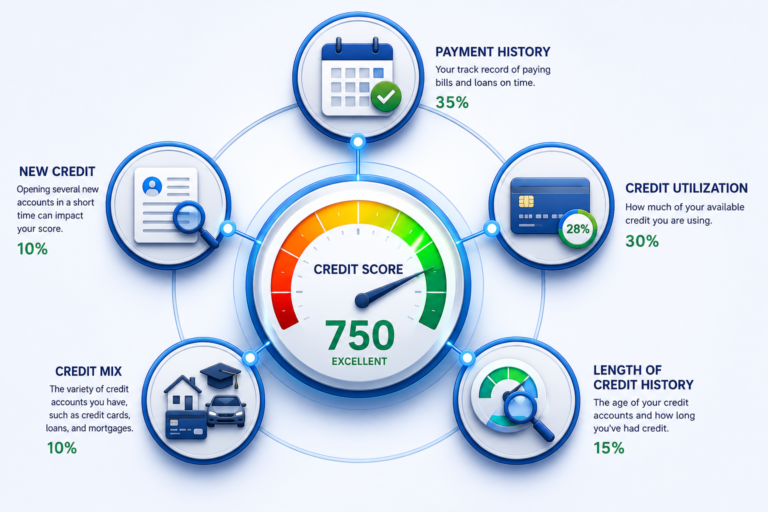
When people ask what factors affect your credit score, the answer always starts with payment history. This is the single most influential factor in both FICO® and VantageScore® models because it reflects how reliably you’ve repaid borrowed money in the past.
Lenders want to know whether you consistently pay your debts on time. A long history of on-time payments builds confidence, while missed or late payments can lower your credit score significantly.
Payment history includes nearly every type of credit account, such as:
- Credit cards
- Personal loans
- Auto loans
- Student loans
- Mortgages
- Retail credit accounts
Even one payment that’s more than 30 days late may appear on your credit report and could negatively affect your score. Multiple late payments or accounts sent to collections usually have an even greater impact.
Tips to Maintain a Strong Payment History
- Pay every bill before its due date.
- Enable automatic payments whenever possible.
- Set payment reminders on your phone or calendar.
- Pay at least the minimum amount due if you can’t pay the full balance.
- Review your credit report regularly to ensure payments are reported correctly.
Maintaining an excellent payment history is one of the fastest ways to build long-term credit health.
Credit Utilization Ratio
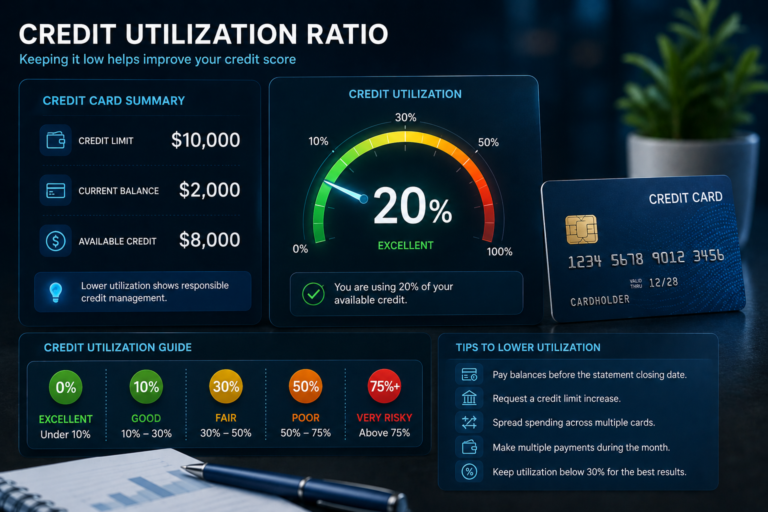
Another major factor that affects your credit score is credit utilization. This measures how much of your available revolving credit you’re currently using.
For example:
- Credit Card Limit: $10,000
- Current Balance: $2,000
Your credit utilization ratio is:
20%
Lower utilization generally signals responsible credit management.
Recommended Credit Utilization
| Utilization | Impact |
|---|
| Under 10% | Excellent |
| Under 30% | Good |
| 30–50% | Fair |
| Above 50% | Negative |
| Above 75% | High Risk |
Many people mistakenly believe carrying a balance helps improve their credit score. In reality, keeping balances low while paying them on time is usually a healthier approach.
Ways to Lower Credit Utilization
- Pay balances before the statement closing date.
- Request a higher credit limit (if appropriate).
- Spread spending across multiple cards.
- Avoid maxing out your credit cards.
- Make multiple payments during the month if needed.
Credit utilization can change from month to month, so improving it may help your score relatively quickly.
Length of Credit History
Another important factor that affects your credit score is the length of your credit history. Lenders generally prefer borrowers who have demonstrated responsible credit behavior over a longer period.
Your credit history doesn’t simply measure how old your oldest account is. Credit scoring models typically consider several elements, including:
- Age of your oldest credit account
- Age of your newest account
- Average age of all credit accounts
- How long specific accounts have remained active
For example, if you’ve maintained a credit card for 10 years with consistent on-time payments, it sends a stronger signal to lenders than opening several brand-new accounts within a short period.
Why Credit History Matters
A longer credit history gives lenders more information about your financial habits. It shows whether you consistently manage debt responsibly through different financial situations.
People with short credit histories aren’t automatically considered risky, but they simply have less information available for lenders to evaluate.
How to Build a Longer Credit History
- Keep your oldest credit card open whenever possible.
- Avoid closing long-established accounts without a good reason.
- Open new credit accounts only when necessary.
- Maintain older accounts in good standing by using them occasionally.
Remember that building credit history takes time. Unfortunately, there is no shortcut for increasing the average age of your accounts.
Credit Mix
Credit mix refers to the variety of credit accounts you successfully manage. While it isn’t the largest credit score factor, having experience with different types of credit can positively influence your score.
Examples of different credit types include:
Revolving Credit
- Credit Cards
- Store Credit Cards
- Lines of Credit
Installment Credit
- Auto Loans
- Mortgages
- Personal Loans
- Student Loans
A healthy mix demonstrates that you can responsibly manage different financial obligations over time.
However, you should never open new accounts solely to improve your credit mix. The potential benefit is usually small compared to the risks of taking on unnecessary debt.
Best Practices
- Only borrow money when you genuinely need it.
- Make all payments on time.
- Keep balances low.
- Avoid applying for multiple new accounts at once.
Over time, your credit mix naturally improves as you responsibly use different financial products.
New Credit and Hard Inquiries
Whenever you apply for new credit, lenders may perform a hard inquiry on your credit report.
Examples include:
- Credit card applications
- Mortgage applications
- Auto loan applications
- Personal loan applications
A single hard inquiry usually has only a small impact on your credit score. However, multiple hard inquiries within a short period may suggest higher borrowing risk.
It’s also important to understand the difference between hard inquiries and soft inquiries.
Hard Inquiry
- Can affect your credit score
- Happens when applying for new credit
- Remains on your credit report for up to two years
Soft Inquiry
- Does not affect your credit score
- Occurs when checking your own credit report
- Often used for pre-qualified offers and background checks
Since you’ve already published an article on Does Checking Your Credit Score Lower It?, you can internally link that article here to provide readers with a more detailed explanation of soft inquiries.
What Does NOT Affect Your Credit Score?
Many people believe certain financial activities automatically improve or damage their credit score. In reality, several common myths continue to circulate online.
Here are some things that generally do not affect your credit score directly:
Your Income
Whether you earn $40,000 or $400,000 per year, your income alone does not determine your credit score. Lenders may consider your income when reviewing loan applications, but credit scoring models focus on your credit behavior instead.
Your Savings Account Balance
Having a large amount of money in your savings account is financially beneficial, but it doesn’t directly increase your credit score.
Checking Your Own Credit Score
Checking your own credit report or credit score creates a soft inquiry, which does not lower your credit score.
Debit Card Usage
Using a debit card responsibly helps manage your money, but debit card activity is generally not reported to credit bureaus and therefore doesn’t directly influence your credit score.
If you want to build a stronger credit profile, focus on these proven habits:
 Always Pay Bills on Time
Payment history remains the single most important factor affecting your credit score.
Keep Credit Utilization Low
Aim to keep your utilization below 30%, and under 10% if possible.
Avoid Unnecessary Credit Applications
Only apply for new credit when you genuinely need it to minimize unnecessary hard inquiries.
Keep Older Accounts Open
Maintaining long-standing accounts helps preserve the average age of your credit history.
Monitor Your Credit Report
Regularly review your credit reports for errors and dispute any inaccurate information promptly.
Diversify Credit Naturally
Over time, responsibly managing different types of credit can strengthen your credit profile without taking on unnecessary debt.
Frequently Asked Questions (FAQs)
What is the biggest factor affecting your credit score?
Payment history is generally considered the most influential factor because it shows lenders whether you’ve consistently paid your debts on time.
Does checking my own credit score lower it?
No. Checking your own credit score creates a soft inquiry and does not negatively affect your credit score.
What is the ideal credit utilization ratio?
Many financial experts recommend keeping your utilization below 30%, while maintaining it below 10% may provide additional benefits.
How long does negative information stay on a credit report?
Depending on the type of information, negative items may remain on your credit report for several years. The exact time frame varies based on the item.
Can I improve my credit score quickly?
Some improvements, such as lowering your credit utilization, may have an effect relatively quickly. Building a strong payment history and long credit history takes more time and consistency.
Final Thoughts
Understanding what factors affect your credit score empowers you to make smarter financial decisions and build a healthier financial future.
While no single strategy guarantees an instant improvement, consistently paying your bills on time, keeping credit utilization low, maintaining older accounts, limiting unnecessary credit applications, and monitoring your credit report can make a meaningful difference over time.
Instead of focusing on quick fixes, prioritize responsible financial habits. As these positive behaviors accumulate, you’ll be in a stronger position to qualify for better credit cards, lower loan interest rates, and improved financial opportunities.
Whether you’re just starting your credit journey or working to rebuild your score, understanding these key factors is the foundation of long-term credit success.





Pingback: How to Read a Credit Report (2026 Complete Guide) - Credify UP
“Thank you aapke comment ke liye! Agar aap credit score aur monitoring ke baare mein aur jaanna chahte hain, toh aap hamare ye articles check kar sakte hain:
Best Credit Score Apps in USA: https://bfcreditscore.com/best-credit-score-apps-usa/
Best Credit Monitoring Services in USA: https://bfcreditscore.com/best-credit-monitoring-services-in-usa/