
How to Build Credit Score from Zero USA (2026 Beginner Guide)
Table of Contents
- What Does “No Credit History” Mean?
- Why Building Credit Is Important
- How Credit Scores Are Created
- Best Ways to Build Credit from Zero
- Mistakes Beginners Should Avoid
- FAQs
- Final Conclusion
What Does “No Credit History” Mean?
Having no credit history means the major credit bureaus do not have enough financial information to calculate your credit score.
This usually happens if you have never:
- Used a credit card
- Taken out a loan
- Financed a vehicle
- Had utility accounts reported to credit bureaus
- Used any credit-building product
Without a credit history, lenders cannot easily determine how responsible you are with borrowed money.
As a result, getting approved for loans or credit cards may become more difficult.
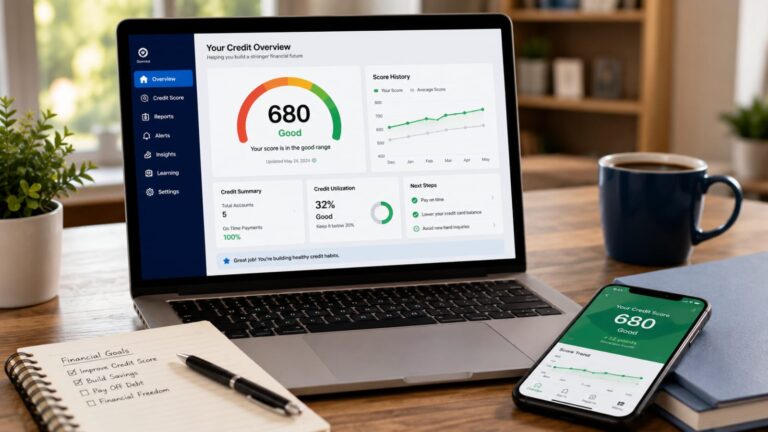
Why Is Building Credit Important?
A strong credit profile can help you:
- Get approved for credit cards
- Qualify for lower interest rates
- Buy a home
- Finance a vehicle
- Rent an apartment
- Access higher credit limits
- Save thousands of dollars over time
Good credit isn’t just about borrowing money—it’s about creating financial opportunities.
How Is Your First Credit Score Created?
Many beginners think they receive a credit score immediately after opening a credit card.
That’s not true.
Most people receive their first FICO® Score after approximately six months of reported credit activity.
During this time, lenders report information such as:
- Payment history
- Credit utilization
- Account age
- Credit mix
- Recent credit applications
Once enough information has been collected, the credit bureaus can generate your first score.
Best Ways to Build Credit Score from Zero
1. Apply for a Secured Credit Card
A secured credit card is one of the easiest ways to establish credit.
You provide a refundable security deposit, which usually becomes your credit limit.
Example:
- Deposit: $300
- Credit Limit: $300
Use the card responsibly by:
- Making small purchases.
- Paying the balance in full every month.
- Keeping utilization below 30%.
Responsible use helps create positive payment history.
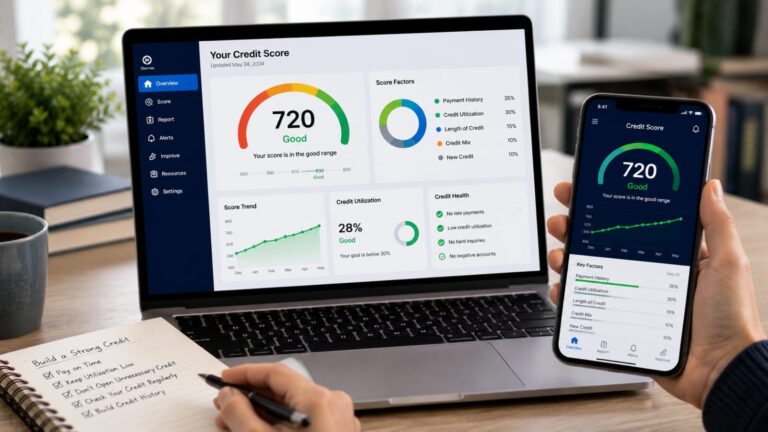
2. Open a Credit Builder Loan
If you don’t qualify for a traditional loan, a credit builder loan is one of the safest ways to establish your first credit history.
Unlike a regular loan, you don’t receive the money immediately.
Instead:
- The lender places the loan amount into a secured savings account.
- You make monthly payments.
- Each on-time payment is reported to the major credit bureaus.
- Once the loan is fully repaid, you receive the money.
This helps you build a strong payment history while saving money.
Advantages
- Builds positive payment history.
- Helps establish your first credit score.
- Encourages savings.
- Suitable for beginners with no credit history.
Things to Remember
- Never miss a payment.
- Choose a lender that reports to all three major credit bureaus.
3. Become an Authorized User
Another simple method is becoming an authorized user on a trusted family member’s credit card.
When the primary cardholder has:
- Excellent payment history
- Low credit utilization
- Long credit history
their positive account history may also appear on your credit report.
This can help establish your credit history much faster than starting completely alone.
Benefits
- No security deposit required.
- Helps build account age.
- Can improve your credit profile quickly.
Risks
If the primary cardholder:
- Misses payments
- Carries high balances
your credit profile could also be affected.
Choose someone who consistently manages credit responsibly.
4. Apply for a Student Credit Card
If you’re a college student, a student credit card can be an excellent first step.
Many banks offer cards specifically designed for students with:
- Lower credit limits
- Easier approval requirements
- Credit-building features
To use a student credit card wisely:
- Make only small purchases.
- Pay the balance in full every month.
- Avoid carrying unnecessary debt.
Responsible use over time helps establish a strong credit history.
5. Report Rent and Utility Payments
Many people don’t realize that regular payments such as:
- Rent
- Electricity
- Internet
- Mobile phone bills
may help build credit when reported through eligible reporting services.
Although not every landlord or utility company reports payments automatically, some third-party services allow these payments to be added to your credit file.
This is a simple way to build credit using expenses you’re already paying every month.
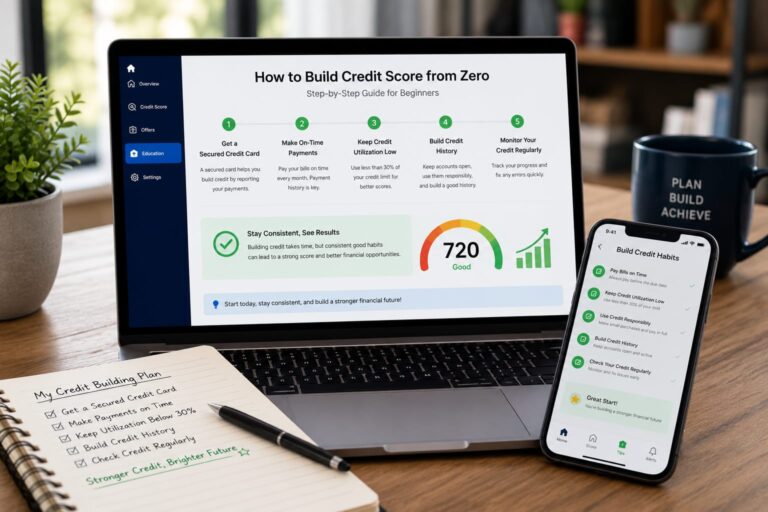
6. Always Pay Bills on Time
Your payment history is one of the most important factors affecting your credit score.
Even one late payment can negatively affect your credit profile.
To avoid missing due dates:
- Set automatic payments.
- Use calendar reminders.
- Enable banking notifications.
- Pay before the due date whenever possible.
Building the habit of paying on time from the beginning creates a solid foundation for excellent credit.
Comparison of Credit Building Methods
| Method | Difficulty | Cost | Speed |
|---|---|---|---|
| Secured Credit Card | Easy | Low | Fast |
| Credit Builder Loan | Easy | Low | Medium |
| Authorized User | Very Easy | Free | Fast |
| Student Credit Card | Easy | Low | Medium |
| Rent Reporting | Easy | Low | Medium |
Each option can help you establish credit, but the best choice depends on your financial situation and eligibility.
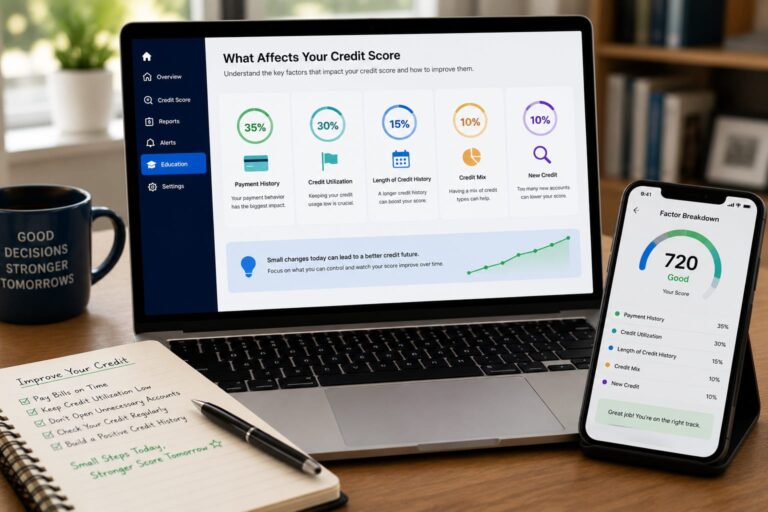
Common Mistakes That Can Hurt Your Credit Score
Building credit from zero is exciting, but many beginners accidentally make mistakes that slow down their progress. Avoiding these common errors will help you establish a strong credit profile much faster.
1. Missing Payment Due Dates
Your payment history is one of the most important factors in your credit score.
Even a single late payment can remain on your credit report for years and reduce your score.
Tips to Avoid Late Payments
- Enable AutoPay.
- Set phone reminders.
- Pay a few days before the due date.
- Never ignore your monthly statements.
Making every payment on time builds trust with lenders.
2. Using Your Entire Credit Limit
Many beginners think using their full credit limit helps build credit faster.
Unfortunately, that’s one of the biggest mistakes.
For example:
Credit Limit: $500
Good Balance:
- $50–$150
Bad Balance:
- $450–$500
Experts recommend keeping your credit utilization below 30%, while staying under 10% is even better for maximizing your score.
3. Applying for Too Many Credit Cards
Every credit application may create a hard inquiry on your credit report.
Submitting multiple applications within a short time can make lenders believe you’re experiencing financial difficulties.
Instead:
- Apply only when necessary.
- Wait several months between applications.
- Compare offers before applying.
Quality matters more than quantity.
4. Closing Your First Credit Card
Many people close their oldest credit card after receiving a newer one.
However, your oldest account helps improve your average credit age, which contributes positively to your credit score.
Unless the card has expensive annual fees, it’s often better to keep it open.
5. Never Checking Your Credit Report
Mistakes happen more often than people realize.
Sometimes your report may contain:
- Incorrect personal details
- Accounts that aren’t yours
- Duplicate debts
- Fraudulent activity
Reviewing your credit report regularly helps you catch errors early.
Expert Strategies to Build Credit Faster
While there are no overnight shortcuts, these proven habits can help you build strong credit efficiently.
Always Pay On Time
Payment history is the foundation of excellent credit.
Keep Utilization Low
Aim to use less than 30% of your available credit.
Monitor Your Credit Monthly
Use trusted credit monitoring apps to:
- Track progress
- Detect fraud
- Review score changes
- Understand credit factors
Avoid Unnecessary Debt
Only borrow what you can comfortably repay.
Responsible borrowing demonstrates financial discipline.
Stay Patient
Building excellent credit usually takes months or even years.
Consistency always beats shortcuts.
Monthly Credit Building Checklist
Complete these simple tasks every month:
Pay every bill on time.
Keep credit utilization below 30%.
Review your credit score.
Check your credit report.Avoid unnecessary hard inquiries.
Continue building payment history.
Keep older accounts open whenever possible.
Following this checklist consistently will help you establish a healthy credit profile over time.
Frequently Asked Questions (FAQs)
1. Can I build a credit score if I have no credit history?
Yes. You can build a credit score from zero by using a secured credit card, a credit builder loan, becoming an authorized user, or responsibly managing a student credit card. Most people receive their first FICO® Score after several months of reported credit activity.
2. How long does it take to build a credit score from zero?
Most people receive their first credit score after 3 to 6 months of consistent credit activity. Building an excellent credit score generally takes longer and depends on responsible financial habits.
3. What is the easiest way to build credit in the USA?
A secured credit card is one of the easiest and safest ways to start building credit because it is designed specifically for people with little or no credit history.
4. Does checking my own credit score lower it?
No. Checking your own credit score creates a soft inquiry, which does not affect your credit score.
5. What credit utilization should beginners maintain?
Financial experts recommend keeping your credit utilization below 30%, while staying under 10% may help maximize your credit score.
6. Is becoming an authorized user a good idea?
Yes, provided the primary cardholder has an excellent payment history and low credit utilization. Their positive account history may help strengthen your credit profile.
7. Can rent payments help build credit?
Yes. Some rent-reporting services report your on-time rent payments to credit bureaus, allowing them to contribute toward your credit history.
Key Takeaways
- Building credit from zero is possible for everyone.
- Secured credit cards are one of the best starting options.
- Credit builder loans help establish positive payment history.
- Becoming an authorized user may speed up credit building.
- Keep your credit utilization below 30%.
- Never miss a payment.
- Monitor your credit regularly.
- Good credit is built through consistency, not shortcuts.
Final Conclusion
Learning how to build a credit score from zero is one of the most valuable financial skills you can develop. Although starting without a credit history may seem challenging, it is completely possible to establish excellent credit by following proven strategies.
Opening a secured credit card, using a credit builder loan, becoming an authorized user, and making every payment on time are all effective ways to create a strong credit foundation. As your positive payment history grows, lenders become more confident in your ability to manage credit responsibly.
Remember that building excellent credit is a long-term process. Small, responsible financial decisions made consistently over time often produce the biggest results.
Whether your goal is buying a home, financing a car, qualifying for better credit cards, or simply improving your financial future, building your credit from zero today can open many opportunities tomorrow.
Pingback: What Factors Affect Your Credit Score? (2026 Guide) - Credify UP
“Thank you aapke comment ke liye! Agar aap credit score aur monitoring ke baare mein aur jaanna chahte hain, toh aap hamare ye articles check kar sakte hain:
Best Credit Score Apps in USA: https://bfcreditscore.com/best-credit-score-apps-usa/
Best Credit Monitoring Services in USA: https://bfcreditscore.com/best-credit-monitoring-services-in-usa/