
How Long Does It Take to Improve Your Credit Score? (2026 Timeline Guide)
Improving your credit score doesn’t happen overnight, but the good news is that positive financial habits can begin making a difference sooner than many people expect. Whether you’re trying to qualify for a mortgage, auto loan, personal loan, or a better credit card, understanding the credit score improvement timeline helps you set realistic expectations and stay motivated.
Many people ask, “How long does it take to improve your credit score?” The answer depends on several factors, including your current credit profile, payment history, debt levels, and the type of negative information on your credit report.
For some people, small improvements may appear within 30 to 60 days, while larger increases can take several months or even longer. The key is consistency and responsible credit management.
In this guide, you’ll learn what affects your credit score, how long different improvements typically take, and the fastest ways to build stronger credit over time.

What Affects Your Credit Score Timeline?
The amount of time required to improve your credit score depends on the information reported to the credit bureaus.
The most important factors include:
Payment History
Making every payment on time is one of the biggest factors in improving your credit score.
Credit Utilization
Keeping your credit card balances low compared to your credit limits can help your score improve more quickly.
Length of Credit History
Older credit accounts generally strengthen your credit profile over time.
New Credit Applications
Applying for several new credit accounts within a short period may temporarily reduce your score.
Credit Mix
Having different types of credit, such as credit cards and installment loans, may positively influence your credit profile when managed responsibly.
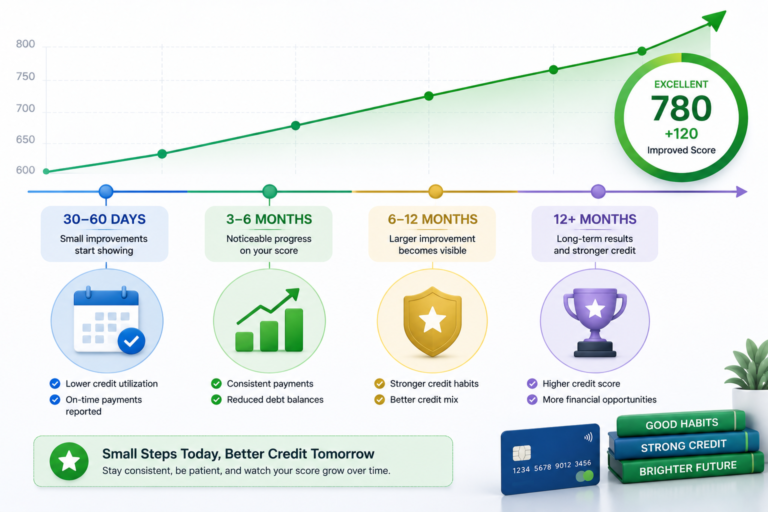
Typical Credit Score Improvement Timeline
Although every financial situation is different, many consumers experience improvements within these general time frames:
| Time | Possible Improvement |
|---|---|
| 30–60 Days | Lower credit utilization may increase your score. |
| 3–6 Months | Consistent on-time payments can show noticeable progress. |
| 6–12 Months | Strong financial habits often lead to larger improvements. |
| 12+ Months | Long-term responsible credit management builds excellent credit. |
Remember that serious negative items, such as collections or bankruptcies, may require more time to recover from.
Fastest Ways to Improve Your Credit Score
If you’re wondering how fast you can improve your credit score, the answer depends on the actions you take. Some improvements can happen within a month, while others require consistent effort over several months.
Here are the most effective strategies.
1. Pay Every Bill on Time
Payment history is the single most important factor affecting your credit score. Even one missed payment can negatively impact your score.
Set up:
- Automatic payments
- Calendar reminders
- Banking alerts
Making every payment on time consistently is one of the fastest ways to build stronger credit.
2. Lower Your Credit Utilization
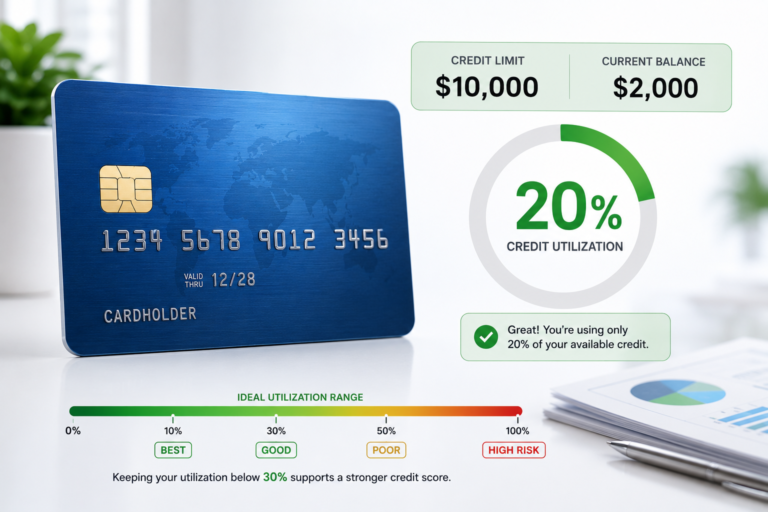
Your credit utilization ratio is the percentage of available credit you’re currently using.
Example:
- Credit Limit: $10,000
- Balance: $2,000
- Utilization: 20%
Financial experts generally recommend keeping utilization below 30%, while below 10% is even better for maximizing your credit score.
Paying down balances before your statement closing date may help your score improve faster.
3. Avoid Applying for Too Many Credit Cards
Every new credit application may result in a hard inquiry.
Multiple hard inquiries within a short period can temporarily lower your score and may signal higher lending risk.
Only apply for new credit when you genuinely need it.
4. Keep Older Credit Accounts Open
The age of your credit accounts contributes to your overall credit history.
Closing an old account may reduce your average account age and could negatively affect your utilization ratio.
If the account has no annual fee and is in good standing, keeping it open may benefit your credit profile.
What Can Delay Credit Score Improvement?
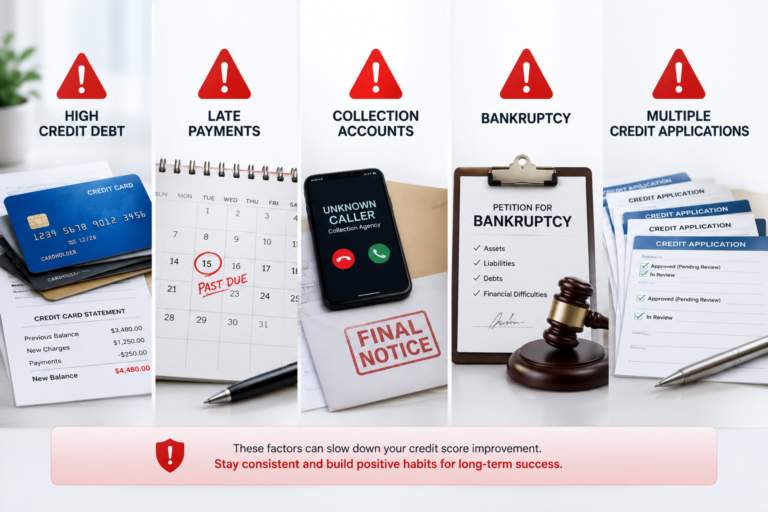
Many people follow good financial habits but still don’t see immediate results.
Common reasons include:
High Credit Card Balances
Large outstanding balances may slow your progress.
Late Payment History
Late payments can remain on your credit report for several years, although their impact generally decreases over time.
Collection Accounts
Accounts in collections may require additional time before your score significantly improves.
Bankruptcy
Bankruptcy has one of the longest-lasting impacts on a credit report and usually requires years of responsible financial behavior for substantial recovery.
Reporting Delays
Creditors typically report account information every month, meaning improvements may not appear immediately after making payments.
Patience and consistency are essential.
Do You Need Credit Monitoring While Improving Your Score?
If you’re actively working to improve your credit score, using a credit monitoring service can be a smart decision. While credit monitoring itself does not increase your credit score, it helps you stay informed about important changes to your credit report. You’ll receive alerts when new accounts are opened, hard inquiries appear, balances change, or suspicious activity is detected. This allows you to quickly identify errors or potential identity theft before they have a long-term impact on your credit profile.
Credit monitoring is especially useful if you’re following a credit improvement plan. As you pay down credit card balances, make on-time payments, or reduce your credit utilization, you can monitor how these actions affect your credit score over time. Seeing your progress can help you stay motivated and confirm that your positive financial habits are producing results.
If you’re preparing to apply for a mortgage, auto loan, or personal loan, credit monitoring becomes even more valuable. It gives you an opportunity to spot reporting mistakes and dispute inaccurate information before lenders review your credit history. Many services also provide educational tools, score simulators, and personalized recommendations that can help you make informed financial decisions.
Ultimately, credit monitoring should be viewed as a support tool rather than a credit repair solution. It won’t fix your credit automatically, but it can help you protect your financial information, respond quickly to unexpected changes, and track your progress as you build a stronger credit profile. For anyone serious about improving their credit score, combining responsible credit habits with regular credit monitoring is a practical long-term strategy.
Expert Tips for Faster Results
Financial professionals recommend these best practices:
- Pay more than the minimum payment whenever possible.
- Reduce outstanding debt before applying for new credit.
- Review your credit report regularly for errors.
- Dispute inaccurate information promptly.
- Keep old accounts open if appropriate.
- Avoid unnecessary hard inquiries.
- Monitor your progress every month.
Small improvements made consistently often produce the best long-term results.
Real-Life Credit Score Improvement Scenarios
Every person’s financial situation is different, so the time required to improve a credit score varies. Below are some common examples that show realistic expectations.
Scenario 1: Paying Down Credit Card Debt
Situation:
Sarah has a credit card with a $5,000 limit and a balance of $4,200 (84% utilization).
Action:
She pays the balance down to $900 (18% utilization).
Possible Timeline:
Within 30–60 days, after the credit card issuer reports the new balance, Sarah may notice an improvement in her credit score.
Scenario 2: Recovering From Late Payments
Situation:
John missed two credit card payments last year.
Action:
He starts making every payment on time and never misses another due date.
Possible Timeline:
His payment history gradually becomes stronger over 6–12 months, although the late payments may remain on his credit report for several years.
Scenario 3: Correcting Credit Report Errors
Situation:
Emily finds an account on her credit report that doesn’t belong to her.
Action:
She disputes the error with the appropriate credit bureau.
Possible Timeline:
If the dispute is successful, her credit score may improve shortly after the incorrect information is removed.
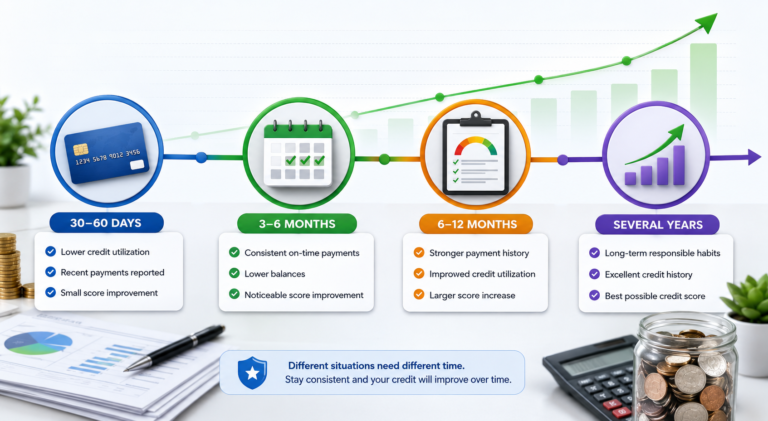
Credit Score Recovery Timeline by Situation
| Financial Situation | Typical Improvement Timeline |
|---|---|
| Lowering credit utilization | 30–60 days |
| Consistent on-time payments | 3–6 months |
| Recovering from late payments | 6–12 months |
| Correcting reporting errors | After successful dispute resolution |
| Recovering from collections | Several months to years |
| Recovering from bankruptcy | Multiple years |
Remember that these are general estimates. Individual results vary depending on your overall credit profile.
Common Credit Score Myths
Many consumers believe inaccurate information about credit scores. Let’s clear up some of the most common myths.
Myth 1: Checking Your Own Credit Score Lowers It
Fact: Checking your own credit score creates a soft inquiry, which generally does not affect your score.
Myth 2: Carrying a Credit Card Balance Helps Your Score
Fact: Paying your balance in full each month is usually better than carrying unnecessary debt.
Myth 3: Closing Old Credit Cards Always Improves Your Score
Fact: Closing older accounts may reduce your average credit history and increase your credit utilization ratio.
Myth 4: Credit Repair Is Instant
Fact: Building good credit requires time, patience, and consistent financial habits.
Expert Advice
Financial professionals recommend focusing on long-term habits instead of quick fixes.
The best strategy includes:
- Paying every bill on time.
- Keeping credit utilization below 30%.
- Avoiding unnecessary credit applications.
- Reviewing your credit report regularly.
- Correcting reporting errors promptly.
- Building a long credit history through responsible account management.
Consistency is one of the biggest factors behind lasting credit score improvement.

Frequently Asked Questions (FAQs)
Can I improve my credit score in 30 days?
Yes, it’s possible to see a small improvement within 30 days if you significantly reduce your credit card balances or correct errors on your credit report. However, major improvements usually take several months of consistent financial habits.
How many points can my credit score increase in a month?
There is no fixed number. Some people may gain 10–30 points in a month, while others may see little or no change. The increase depends on your current credit profile and the actions you take.
Does paying off debt improve my credit score immediately?
Not always. Most lenders report account information monthly, so your updated balances may not appear on your credit report until the next reporting cycle.
Does checking my own credit score hurt it?
No. Checking your own credit score creates a soft inquiry, which generally does not affect your credit score.
What is the fastest way to improve a credit score?
The fastest methods include:
- Paying every bill on time.
- Lowering your credit utilization below 30%.
- Avoiding unnecessary hard inquiries.
- Correcting credit report errors.
- Keeping older credit accounts open.
Key Takeaways
- Improving your credit score takes time and consistency.
- Small improvements may appear within 30–60 days.
- Larger improvements usually require 3–12 months of responsible credit management.
- Payment history and credit utilization have the greatest impact.
- Avoid quick-fix promises and focus on long-term financial habits.
Final Thoughts
If you’ve been asking “How long does it take to improve your credit score?”, the answer depends on your financial situation and the actions you take today.
While there’s no overnight solution, every positive financial decision helps build a stronger credit profile. Paying bills on time, reducing debt, maintaining low credit utilization, and reviewing your credit reports regularly are among the most effective ways to improve your credit score over time.
Patience and consistency are the keys to long-term success. Even small improvements today can lead to better loan approvals, lower interest rates, and greater financial opportunities in the future.