
What Is a Credit Score in USA? Beginner's Guide
- July 14, 2026
- tawebdevelopers
- 5:49 pm
- 18 comments
Learn what a credit score is in the USA, how it works, how it is calculated, why it matters, and practical ways to improve it in this beginner-friendly guide.
Table of Contents
- What Is a Credit Score?
- Why Does Your Credit Score Matter?
- Credit Score Range in the USA
- Who Uses Your Credit Score?5.
- How Credit Scores Work
- Factors That Affect Your Credit Score
- How to Build Good Credit
- Common Mistakes
- FAQs
- Final Thoughts
Introduction
If you’ve ever applied for a credit card, financed a car, rented an apartment, or planned to buy a home in the United States, you’ve probably heard someone mention a credit score.
For many people, it sounds like just another financial number. In reality, your credit score can influence many important decisions throughout your financial life. A strong score may help you qualify for better loan terms, while a poor score can make borrowing more difficult or more expensive.
The good news is that understanding your credit score doesn’t require a finance degree. Once you learn how it works and what affects it, you’ll be in a much better position to make smart financial decisions.
This beginner-friendly guide explains everything you need to know in clear, simple language. Whether you’re building credit for the first time or trying to improve your current score, this article will help you understand the basics with confidence.
1.What Is a Credit Score?
A credit score is a three-digit number that represents how responsibly you have managed credit over time. It helps lenders estimate the likelihood that you’ll repay borrowed money as agreed.
In the United States, most commonly used credit scores range from 300 to 850.
Think of your credit score as a financial report card. Instead of measuring school performance, it reflects how you’ve handled loans, credit cards, and other forms of credit.
A higher score generally indicates lower lending risk, while a lower score suggests there may have been payment problems or limited credit history.
It’s important to remember that your credit score is only one part of your financial profile. Lenders may also consider your income, employment, debt, and other financial information before making a decision.
2.Why Does Your Credit Score Matter?
Your credit score affects much more than loan approvals. Many organizations use it to evaluate financial reliability.
- A good credit score may help you:
- Qualify for credit cards with better benefits
- Receive lower interest rates on loans
- Increase your chances of mortgage approval
- Rent an apartment more easily
- Access higher credit limits
- Save money over time through lower borrowing costs
- On the other hand, a low credit score may result in:
- Higher interest rates
- Lower approval chances
- Security deposits for certain services
- Limited borrowing options
- This is why learning about credit early can have long-term financial benefits.
Better Loan Approvals
Lower Interest Rates
Easy Apartment Rentals
More Financial Opportunities
3.Credit Score Range in the USA
Although different scoring models exist, many lenders use score ranges similar to the following:
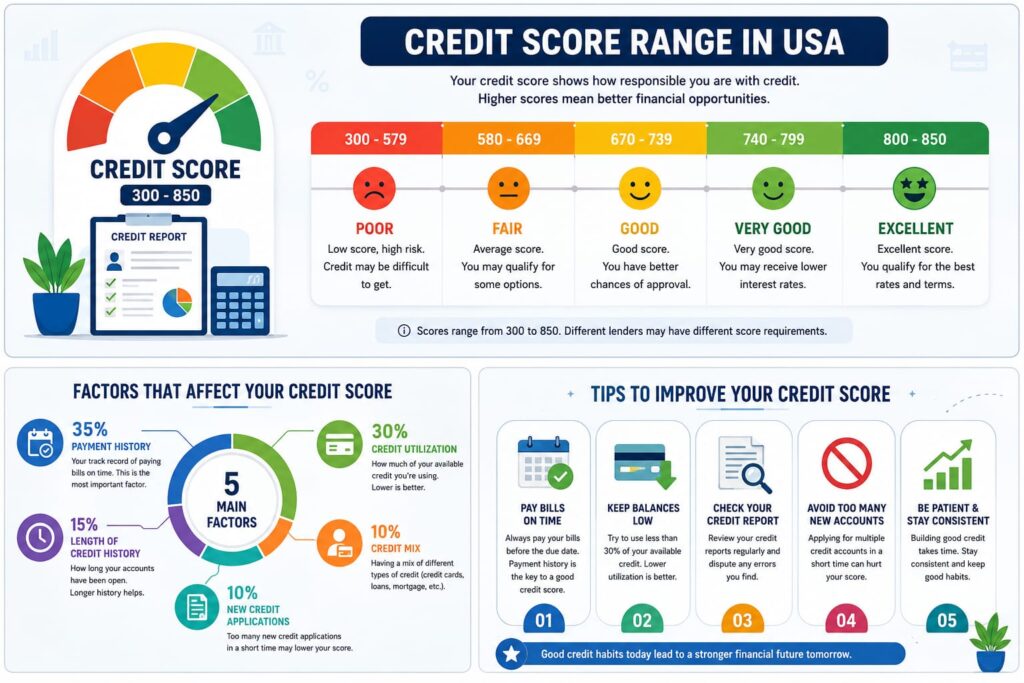
300–579
580–669
670–739
740–799
800–850
Poor
Fair
Good
Very Good
Excelent
Reaching a higher range doesn’t happen overnight. Building a strong credit history usually requires consistent financial habits over time.
4.Who Uses Your Credit Score?
Many people believe only banks check credit scores, but several organizations may review your credit information when making financial decisions.
These can include:
- Banks
- Credit card companies
- Mortgage lenders
- Auto finance companies
- Some landlords
- Certain insurance companies (depending on state laws)
Each organization may have its own approval requirements, so there isn’t one universal minimum credit score for every situation.
How Do Credit Scores Work?
A credit score is calculated using the information in your credit report. Every time you borrow money, make a payment, open a new credit account, or manage existing credit, that activity may be recorded on your credit report. Credit scoring models analyze this information and assign a score that reflects your overall creditworthiness.
Rather than looking at a single action, credit scores consider your financial behavior over time. Consistently paying bills on time and using credit responsibly generally has a positive impact, while missed payments and excessive debt can reduce your score.
Although many lenders use similar scoring systems, different companies may use different models. As a result, your score may vary slightly depending on where you check it.
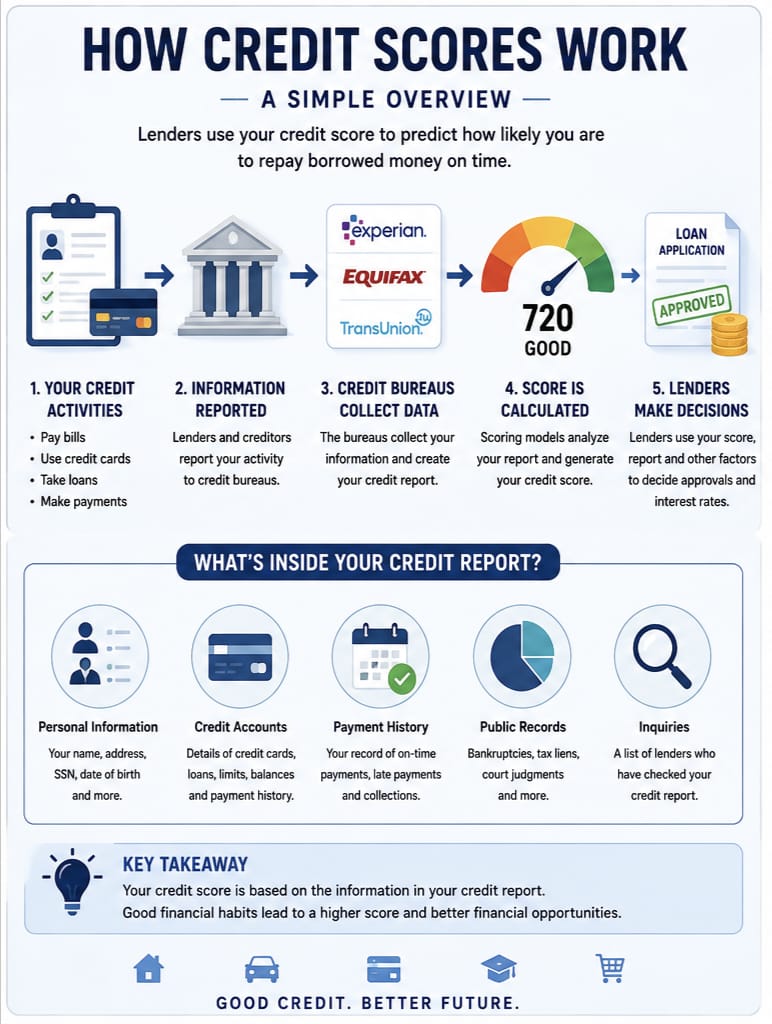
The Five Main Factors That Affect Your Credit Score
Understanding these factors is one of the best ways to build and maintain healthy credit.
1. Payment History
Payment history is often considered the most important factor in a credit score.
Lenders want to know whether you pay your bills on time. A history of consistent, on-time payments demonstrates financial responsibility.
Good habits include:
Paying every bill before the due date.
Setting up automatic payments when possible.
Paying at least the minimum amount due if you cannot pay the full balance.
Mistakes to avoid:
Missing payment deadlines.
Making late payments repeatedly.
Allowing accounts to go into collections.
Even one late payment can remain on your credit report for years, which is why payment history deserves special attention.
2. Credit Utilization
Credit utilization refers to how much of your available revolving credit you are currently using.
For example:
Credit Card Limit: $5,000
Current Balance: $1,000
Your credit utilization is:
20%
Many financial professionals recommend keeping utilization below 30%, while lower percentages may be even better.
High utilization can signal that you are relying heavily on credit, which may negatively affect your score.
Tips to keep utilization low:
Pay credit card balances regularly.
Avoid maxing out your cards.
Request a higher credit limit only when appropriate.
Spread purchases across multiple cards instead of using one heavily.
3. Length of Credit History
The age of your credit accounts also plays an important role.
Generally, a longer credit history provides lenders with more information about your financial behavior.
This includes:
- The age of your oldest account.
- The average age of all your accounts.
- How long specific accounts have remained active.
If you have older accounts with positive payment histories, keeping them open may benefit your overall credit profile.
4. Credit Mix
Credit mix refers to the variety of credit accounts you manage.
Examples include:
- Credit cards
- Auto loans
- Student loans
- Personal loans
- Mortgages
Having different types of credit may demonstrate that you can manage multiple financial responsibilities.
However, opening unnecessary accounts simply to improve your credit mix is generally not recommended.
5. New Credit Applications
Each time you apply for new credit, a lender may review your credit report.
Applying for several credit accounts within a short period can make lenders cautious because it may indicate increased borrowing risk.
Before submitting a new application, ask yourself:
- Do I genuinely need this credit account?
- Will it improve my financial situation?
- Can I comfortably manage another payment?
- Applying responsibly helps protect your credit profile.
What Is a Good Credit Score?
While approval requirements vary, many lenders generally consider the following ranges:
300–579
580–669
670–739
740–799
800–850
Poor
Fair
Good
Very Good
Excelent
A score of 670 or higher is often viewed as a good starting point for many financial products. However, approval decisions also depend on factors such as income, employment, debt levels, and the lender’s own policies.
Can Your Credit Score Change?
Yes. Your credit score is not permanent.
- It can increase or decrease depending on your financial activity.
- Your score may improve if you:
- Make payments on time consistently.
- Reduce outstanding credit card balances.
- Maintain older credit accounts responsibly.
- Correct inaccurate information on your credit report.
- Your score may decrease if you:
- Miss payments.
- Carry high credit card balances.
- Apply for many new credit accounts within a short period.
- Default on loans or accounts.
- Monitoring your credit regularly can help you understand how your financial habits influence your score over time.
How to Build Credit from Scratch
If you’re new to credit, building a good credit history may seem challenging. The good news is that everyone starts somewhere, and responsible financial habits can help you establish a solid foundation over time.
Here are a few practical ways beginners can start building credit:
Open Your First Credit Account
Many people begin with a starter credit card or another entry-level credit product. Before applying, compare your options carefully and choose a product that matches your financial needs.
Always Pay on Time
Making payments by the due date is one of the most effective habits for building a positive credit history. Even if you can only pay the minimum amount due, paying on time is generally better than paying late.
Keep Your Credit Card Balance Low
Using a small portion of your available credit may help demonstrate responsible credit management. Try to avoid carrying balances close to your credit limit whenever possible.
Be Patient
Building strong credit takes time. There is no safe or guaranteed shortcut that instantly creates an excellent credit score. Consistency is far more valuable than speed.
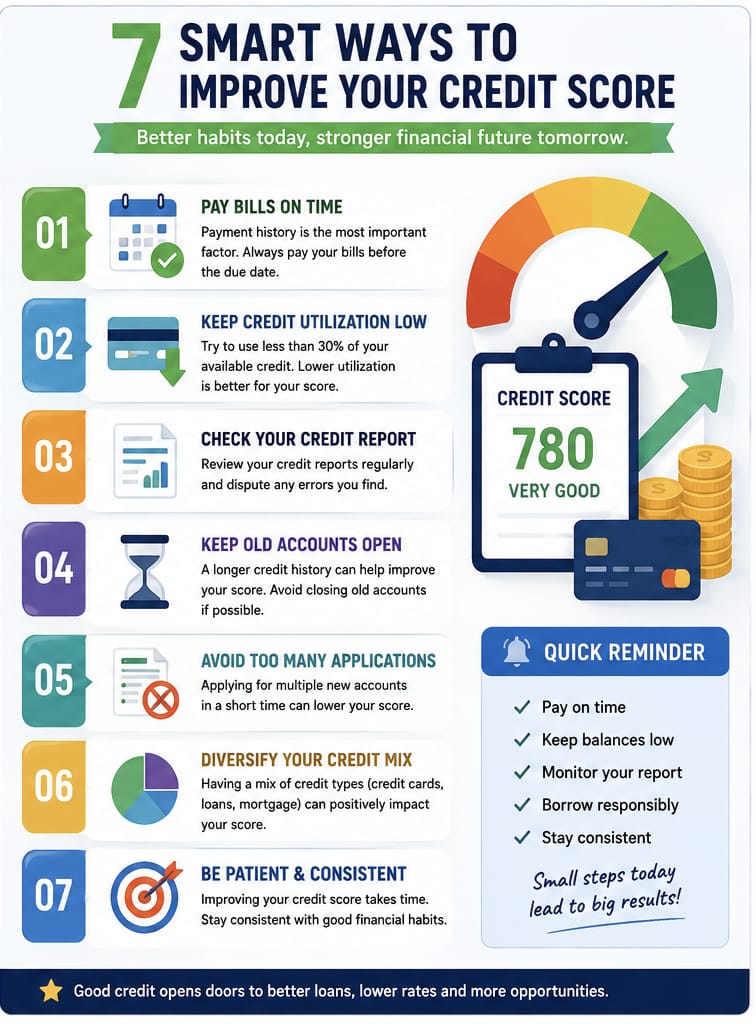
How to Improve Your Credit Score
Whether your credit score is fair or below average, improving it is possible with steady financial habits.
- Pay Every Bill on Time
Late payments can significantly affect your credit profile. Consider setting calendar reminders or automatic payments to reduce the chance of missing a due date.
- Reduce Credit Card Balances
Lower balances generally improve your credit utilization ratio.
Instead of making only minimum payments whenever possible, try paying extra toward outstanding balances.
- Review Your Credit Reports
It’s a good habit to review your credit reports regularly. If you notice information that appears inaccurate, follow the appropriate process to request a review or correction.
- Avoid Unnecessary Credit Applications
Every new credit application should have a clear purpose.
Submitting several applications within a short period may affect your credit profile and make lenders more cautious.
- Build Long-Term Financial Habits
Strong credit isn’t created overnight.
Small habits repeated consistently often produce better long-term results than trying quick fixes.
Common Credit Score Myths
Many people misunderstand how credit scores work. Let’s clear up a few common myths.
Myth 1: Checking Your Own Credit Score Lowers It
Fact:
Checking your own credit score through approved services is generally considered a soft inquiry and does not lower your credit score.
Myth 2: Closing Old Credit Cards Always Improves Your Score
Fact:
Closing older accounts may reduce your available credit and shorten your average credit history. Whether closing an account is beneficial depends on your individual financial situation.
Myth 3: You Need to Carry a Credit Card Balance
Fact:
You do not need to carry debt to build good credit. Paying balances responsibly is generally a healthier long-term approach.
Myth 4: Income Directly Determines Your Credit Score
Fact:
A higher salary does not automatically create a higher credit score.
Credit scores primarily reflect how you manage credit, not how much money you earn.
Common Credit Score Mistakes
Many people unintentionally damage their credit scores by making avoidable mistakes.
Some of the most common include:
- Missing payment deadlines.
- Maxing out credit cards.
- Ignoring monthly account statements.
- Applying for multiple loans at the same time.
- Closing old accounts without understanding the possible impact.
- Forgetting to monitor credit reports for errors.
Avoiding these mistakes can help protect your credit over time.
Beginner Tips for Better Credit
If you’re just getting started, these simple habits can make a difference:
- Pay every bill before the due date.
- Use only a reasonable portion of your available credit.
- Review your credit reports regularly.
- Borrow only when necessary.
- Keep learning about responsible credit management.
Small improvements made consistently are often more effective than dramatic short-term changes.
How Long Does It Take to Improve a Credit Score?
One of the most common questions beginners ask is:
“How long will it take?”
The answer depends on your individual credit history.
Some people may notice gradual improvements within a few months after developing positive financial habits, while rebuilding credit after serious negative events can take considerably longer.
The important thing to remember is that healthy credit is built through consistency rather than quick fixes.
Every on-time payment and every responsible financial decision contributes to your long-term credit profile.
Frequently Asked Questions (FAQs)
What is a credit score?
A credit score is a three-digit number that reflects how responsibly you have managed credit over time. Lenders use it as one factor when evaluating applications for loans, credit cards, and other financial products.
What is considered a good credit score in the USA?
Many lenders generally view a score between 670 and 739 as good. Higher scores may improve your chances of qualifying for favorable terms, although every lender has its own approval criteria.
What is the highest credit score?
Most widely used credit scoring models have a maximum score of 850.
Can I improve my credit score?
Yes. Consistently making payments on time, keeping credit utilization low, reviewing your credit reports for accuracy, and avoiding unnecessary credit applications can help improve your credit profile over time.
How often should I check my credit score?
Checking your credit score regularly is a good habit. It helps you monitor progress and identify potential issues early. Viewing your own score through legitimate services is generally considered a soft inquiry and typically does not lower your score.
Does checking my own credit score hurt it?
No. Checking your own credit score through approved services generally does not affect your credit score.
Final Thoughts
Understanding your credit score is one of the first steps toward making informed financial decisions. While a credit score may seem like just a number, it can influence many aspects of your financial life, including access to credit, borrowing costs, and other opportunities.
Building and maintaining good credit does not happen overnight. It is usually the result of consistent habits, responsible borrowing, and regular monitoring of your credit information. Even small improvements, when maintained over time, can contribute to a stronger financial profile.
Whether you are just beginning your credit journey or looking to strengthen an existing credit history, learning the basics is an investment in your financial future.
At BF Credit Score, our mission is to provide clear, practical, and trustworthy educational content to help readers better understand credit and make confident financial decisions.
Pingback: How Is a Credit Score Calculated in USA? Complete Guide (2026) - Credify UP
“Aapne bilkul sahi kaha! Credit score ke calculation process ko samajhna financial planning ke liye bahut zaroori hai. Jab aapko pata hota hai ki kaun si habits aapke score ko affect karti hain, toh aap behtar decisions le paate hain. Hamein umeed hai ki hamari guide aapke liye helpful sabit hogi!”
Pingback: What Is a Good Credit Score in USA? Credit Score Ranges Explained (2026) - Credify UP
“Bilkul sahi! Credit score ki basics samajhne ke liye hamari Beginner’s Guide ek behtareen start hai. Isse aapko aage ki advanced jaankari samajhne mein kaafi aasani hogi. Agar aapka koi specific sawal ho, toh zaroor poochein!”
Pingback: How to Improve Credit Score in USA: 12 Proven Tips That Really Work (2026) - Credify UP
Pingback: How to Check Credit Score for Free in USA (2026 Complete Guide) - Credify UP
Pingback: Why Is Your Credit Score Important in USA? 10 Real-Life Benefits (2026) - Credify UP
Pingback: Minimum Credit Score for a Credit Card in USA (2026 Complete Guide) - Credify UP
Pingback: 7 Best Credit Score Apps USA (Free & Paid) – 2026 Guide - Credify UP
Pingback: Best Credit Monitoring Services in USA (2026): Top 10 Companies Compared - Credify UP
Pingback: Best Credit Repair Companies USA (2026): Top 10 Legit Services Reviewed - Credify UP
Pingback: Best Credit Report Apps in USA (2026) – Top 10 Compared - Credify UP
Pingback: How Often Does Your Credit Score Update? (2026 Guide) - Credify UP
“Thank you aapke comment ke liye! Agar aap credit score aur monitoring ke baare mein aur jaanna chahte hain, toh aap hamare ye articles check kar sakte hain:
Best Credit Score Apps in USA: https://bfcreditscore.com/best-credit-score-apps-usa/
Best Credit Monitoring Services in USA: https://bfcreditscore.com/best-credit-monitoring-services-in-usa/
Pingback: How to Read a Credit Report (2026 Complete Guide) - Credify UP
“Thank you aapke comment ke liye! Agar aap credit score aur monitoring ke baare mein aur jaanna chahte hain, toh aap hamare ye articles check kar sakte hain:
Best Credit Score Apps in USA: https://bfcreditscore.com/best-credit-score-apps-usa/
Best Credit Monitoring Services in USA: https://bfcreditscore.com/best-credit-monitoring-services-in-usa/
Pingback: Elementor #3244 - Credify UP
“Thank you aapke comment ke liye! Agar aap credit score aur monitoring ke baare mein aur jaanna chahte hain, toh aap hamare ye articles check kar sakte hain:
Best Credit Score Apps in USA: https://bfcreditscore.com/best-credit-score-apps-usa/
Best Credit Monitoring Services in USA: https://bfcreditscore.com/best-credit-monitoring-services-in-usa/