

Does Checking Your Credit Score Lower It? 7 Truth Explained.
- July 25, 2026
- tawebdevelopers
- 2:58 pm
Table of Contents
- Does Checking Your Credit Score Lower It?
- What Is a Soft Inquiry?
- What Is a Hard Inquiry?
- How Much Can a Hard Inquiry Lower Your Score?
- When Should You Check Your Credit Score?
- Best Ways to Monitor Your Credit
- Common Credit Score Myths
- FAQs
- Final Verdict
Does Checking Your Credit Score Lower It?
One of the biggest myths in personal finance is that simply checking your own credit score will damage it. Every day, thousands of Americans search “Does Checking Your Credit Score Lower It” because they’re worried that reviewing their credit score could make it harder to qualify for a mortgage, auto loan, or new credit card.
The good news is that, in most situations, checking your own credit score does not lower it. However, the answer isn’t as simple as “yes” or “no.” The impact depends on who checks your credit, why it’s being checked, and what type of credit inquiry is performed.
Many people confuse a soft inquiry with a hard inquiry. While both involve reviewing your credit report, they affect your credit score very differently. Understanding this distinction can help you monitor your credit confidently while avoiding unnecessary damage caused by certain lending activities.
If you’re actively working to improve your financial health, knowing Does Checking Your Credit Score Lower It is essential. Monitoring your credit regularly allows you to spot reporting errors, detect identity theft, and track your progress as your score improves.
In this complete 2026 guide, you’ll learn exactly how credit inquiries work, when your score can actually decrease, when it stays completely safe, and how to check your credit score without hurting your financial future.
Checking your own score generally involves a soft inquiry, so consumers who want to monitor it regularly can explore our Best Credit Score Apps USA comparison.

Quick Answer: Does Checking Your Credit Score Lower It?
No. Checking your own credit score does not lower your credit score.
When you check your own score through a trusted credit monitoring service, bank, credit card company, or one of the major credit bureaus, the request is classified as a soft inquiry.
Soft inquiries:
- Do not affect your FICO® Score.
- Do not affect your VantageScore.
- Are not visible to lenders reviewing your credit applications.
- Can be performed as often as you like.
Your credit score is only at risk when a lender performs a hard inquiry, typically after you apply for new credit.
Understanding Does Checking Your Credit Score Lower It begins with learning the difference between these two types of credit inquiries.
Why This Question Matters
Millions of Americans avoid checking their credit because they believe doing so will reduce their score.
Unfortunately, this misunderstanding can create bigger problems.
If you never monitor your credit, you may fail to notice:
- Identity theft
- Fraudulent accounts
- Incorrect late payments
- Credit reporting errors
- Falling credit scores
Regular monitoring is actually considered one of the healthiest financial habits.
If you’re already working on improving your score, you should also read our guide on How to Improve Credit Score in USA, where we explain practical strategies that can help increase your score over time.
Understanding Credit Inquiries
Whenever someone accesses your credit report, an inquiry is recorded.
However, not every inquiry affects your score.
There are two different types of inquiries:
Soft Inquiry
Soft inquiries occur when:
- You check your own credit score.
- Your bank provides a free credit score update.
- A credit card company pre-qualifies you.
- Employers perform certain background checks.
- Insurance companies review your credit (where permitted).
These inquiries have zero impact on your credit score.
Hard Inquiry
Hard inquiries happen when you officially apply for new credit, such as:
- Credit cards
- Mortgages
- Auto loans
- Personal loans
- Student loans
Because hard inquiries indicate you’re seeking new credit, they may slightly reduce your score for a short period.

What Is a Soft Inquiry?
To fully understand Does Checking Your Credit Score Lower It, you first need to understand what a soft inquiry is.
A soft inquiry (also called a soft pull) occurs when someone reviews your credit report for reasons that are not related to approving new credit.
The most common example is when you check your own credit score.
A soft inquiry never lowers your FICO® Score or VantageScore.
Common Examples of Soft Inquiries
A soft inquiry happens when:
- You check your own credit score.
- Your bank provides free monthly credit score updates.
- A credit card issuer pre-approves or pre-qualifies you.
- A credit monitoring service checks your report.
- Some employers review your credit (where legally allowed).
- Insurance companies perform certain credit reviews.
These inquiries are visible only to you and cannot be seen by lenders reviewing your future credit applications.
Can You Check Your Credit Score Every Day?
Yes.
If you’re asking Does Checking Your Credit Score Lower It, the answer remains no, even if you check it daily.
Many credit monitoring platforms update your score every day or every week, allowing you to:
- Track improvements
- Detect fraud
- Monitor identity theft
- Follow your credit-building progress
Checking your score frequently is considered a healthy financial habit.
What Is a Hard Inquiry?
A hard inquiry (hard pull) happens when you apply for new credit and authorize a lender to review your credit report.
Unlike soft inquiries, hard inquiries may slightly reduce your credit score because they indicate you’re seeking additional credit.
Examples include:
- Applying for a new credit card
- Applying for an auto loan
- Applying for a mortgage
- Applying for a personal loan
- Applying for certain financing programs
Every hard inquiry becomes part of your credit history for a period of time.

Does Every Hard Inquiry Lower Your Credit Score?
Usually, yes—but only slightly.
For most consumers:
- One hard inquiry may reduce a score by about 2–5 points.
- People with shorter credit histories may experience a slightly larger impact.
- Consumers with long, healthy credit histories often notice little or no visible change.
The effect is normally temporary.
Your score often begins recovering within a few months if you continue making on-time payments and avoid excessive new applications.
How Long Do Hard Inquiries Stay on Your Credit Report?
A hard inquiry generally remains on your credit report for up to two years.
However, its influence on your credit score is usually much shorter.
Most scoring models place greater emphasis on recent inquiries, meaning older inquiries have less impact over time.
Multiple Hard Inquiries: Should You Worry?
Many consumers worry that comparing loan offers will seriously damage their score.
Fortunately, credit scoring models understand that people shop around for the best rates.
For certain loan types, including:
- Mortgages
- Auto loans
- Student loans
multiple hard inquiries made within a limited shopping window are often treated as a single inquiry by many scoring models.
This allows consumers to compare lenders without receiving a major scoring penalty.
When Does Checking Your Credit Score Become Harmful?
This is where many people become confused.
Checking your own score is completely safe.
Applying for multiple new credit cards within a short period is different.
For example:
Safe
- Checking your FICO® Score through your bank.
- Using a free credit monitoring app.
- Viewing your Experian account.
- Reviewing your annual credit reports.
May Affect Your Score
- Applying for five credit cards in one month.
- Applying for several personal loans at the same time.
- Frequently seeking new financing without a clear need.
The difference is not the act of viewing your score—it is the act of requesting new credit.
Does Checking Your FICO® Score Lower It?
No.
Viewing your FICO® Score yourself is considered a soft inquiry.
Whether you check it through:
- Your bank
- A credit monitoring service
- The official credit bureau
- A financial app
your score remains unaffected.
Does Checking Your VantageScore Lower It?
Again, the answer is no.
Viewing your own VantageScore is also a soft inquiry.
Since many lenders and financial institutions use either FICO® or VantageScore, regularly reviewing both can help you better understand your overall credit health.
If you’re unsure how credit scores are actually calculated, our detailed guide on How Is Credit Score Calculated in USA explains the factors that influence both scoring models.
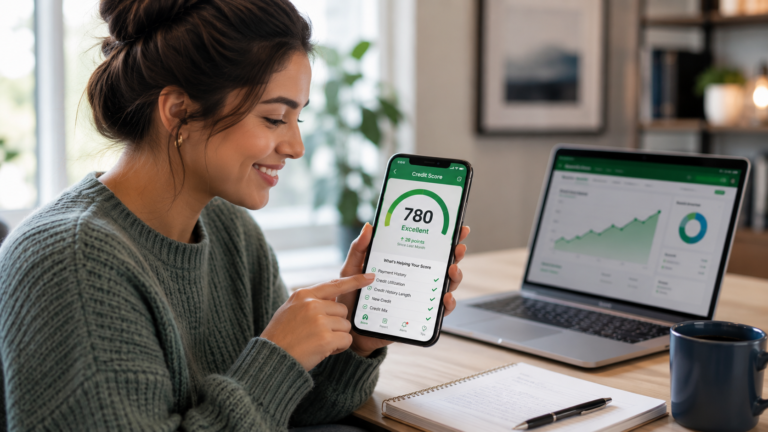
Can Credit Monitoring Lower Your Score?
No.
Credit monitoring services perform soft inquiries only.
Their purpose is to:
- Notify you about suspicious activity.
- Alert you to new accounts.
- Warn you about hard inquiries.
- Help detect identity theft.
- Track improvements in your score.
In fact, regular monitoring can help you correct problems early before they become more serious.
Professional Tip
Many Americans avoid monitoring their credit because they mistakenly believe Does Checking Your Credit Score Lower It has a “yes” answer.
The opposite is often true.
Regularly checking your score allows you to:
- Catch reporting mistakes early.
- Identify fraudulent accounts.
- Monitor your financial progress.
- Prepare for future loan applications.
That’s why financial experts generally encourage consumers to review their credit regularly rather than avoid it.
What Are The Best Credit Monitoring Services To Check Score Safely?
If you are worried about your credit score dropping when you check it, you should use a safe credit monitoring service that uses only soft inquiries.
The best and safest options in USA for 2026 are Experian Free, Credit Karma, and Aura.
1. Experian Free is the safest choice to check your real FICO Score. It is direct from the credit bureau, uses 100% soft inquiry, and never hurts your score. You get free real-time alerts whenever your report changes. This is perfect if you want to check your score daily before applying for a loan.
2. Credit Karma is also 100% safe and completely free. It shows you your TransUnion and Equifax reports with weekly updates. It uses VantageScore instead of FICO, but it is excellent for beginners who want to monitor their credit without any risk. Checking your score on Credit Karma will never lower your score.
3. Aura is best if you want safe monitoring with complete identity protection. Along with three-bureau monitoring, it offers $1M identity theft insurance, dark web monitoring, and a VPN. It also uses only soft inquiries, so you can safely track your family’s credit scores in one dashboard.
All three services use bank-level encryption and soft inquiry technology. This means you can check your score as many times as you want, and your score will stay exactly the same. Only hard inquiries from lenders when you apply for a mortgage, auto loan, or credit card can lower your score by 3-5 points.
My personal advice is to start with Experian Free for safe FICO tracking, and if you need family protection, upgrade to Aura.
Common Myths About Checking Your Credit Score
One reason people continue searching Does Checking Your Credit Score Lower It is because there is a lot of misinformation online. Let’s separate facts from myths.
Myth #1: Checking Your Own Credit Score Always Lowers It
Truth: False.
This is the biggest misconception.
When you check your own credit score through a trusted service, it creates only a soft inquiry, which has no impact on your FICO® Score or VantageScore.
Myth #2: Banks Can See Every Time You Check Your Credit
Truth: False.
Lenders reviewing your application cannot see the soft inquiries you make when checking your own credit.
They only see relevant hard inquiries.
Myth #3: Credit Monitoring Hurts Your Score
Truth: False.
Credit monitoring companies perform soft inquiries.
Monitoring your credit regularly is actually recommended because it helps detect:
- Identity theft
- Fraud
- Reporting errors
- Unauthorized credit applications
Myth #4: Every Credit Check Is Bad
Truth: False.
Only certain hard inquiries may slightly affect your score.
Soft inquiries have absolutely no negative effect.
Best Ways to Check Your Credit Score for Free
If you’re wondering Does Checking Your Credit Score Lower It, you should also know the safest places to monitor it.
Reliable options include:
1. Your Bank
Many American banks provide free monthly FICO® or VantageScore updates.
2. Credit Card Companies
Several major credit card issuers offer complimentary credit score monitoring.
3. AnnualCreditReport
You can review your official credit reports without affecting your score.
Although credit reports don’t always include your numerical score, they help identify errors and fraudulent accounts.
4. Credit Bureaus
The three major bureaus:
allow consumers to access their credit information through secure online accounts.
How Often Should You Check Your Credit Score?
Financial experts recommend checking your score:
At Least Once Per Month
Monthly monitoring helps you:
- Track improvements
- Detect fraud
- Catch reporting errors
- Prepare for loan applications
Weekly Monitoring
If you’re actively trying to improve your credit score, weekly monitoring can help you measure progress.
Daily Monitoring
Daily monitoring is completely safe if your service provides it.
Remember:
Does Checking Your Credit Score Lower It?
Still No.
Checking every day only creates soft inquiries.
Mistakes That Actually Lower Your Credit Score
Instead of worrying about checking your score, focus on the activities that truly affect it.
Missing Payments
Payment history is one of the largest factors in most credit scoring models.
Late payments can significantly reduce your score.
High Credit Utilization
Using a large percentage of your available credit may lower your score.
Experts often recommend keeping utilization below 30%, with even lower percentages being preferable for many consumers.
Applying for Too Many Credit Cards
Submitting several credit applications within a short period may result in multiple hard inquiries.
Closing Old Credit Accounts
Closing long-established accounts may reduce your average credit history length and affect your available credit.
Ignoring Credit Report Errors
Incorrect late payments or fraudulent accounts can reduce your score if left unresolved.
If you discover inaccurate information, follow the process explained in How to Dispute Credit Report Errors.

Expert Tips to Protect Your Credit Score
If you’re serious about improving your financial health, follow these habits:
 Monitor Your Credit Regularly
Knowing your current score helps you make informed financial decisions.
Pay Every Bill On Time
Consistent on-time payments remain one of the strongest positive signals for credit scoring.
Keep Credit Utilization Low
Lower balances relative to your credit limits generally support healthier scores.
Limit New Credit Applications
Only apply for credit when you genuinely need it.
Review Your Credit Reports
Check for:
- Incorrect balances
- Fraudulent accounts
- Personal information errors
- Duplicate accounts
Correcting mistakes early helps protect your credit profile.

When Should You Be Concerned About a Credit Inquiry?
Most people should only pay attention to hard inquiries.
For example:
- Mortgage application
- Auto loan application
- Credit card application
- Personal loan application
These are normal parts of borrowing money.
However, if you notice hard inquiries you don’t recognize, it could indicate fraud or identity theft.
In that situation, contact the credit bureau immediately and consider placing a fraud alert or credit freeze.
Key Takeaway
The next time someone asks:
Does Checking Your Credit Score Lower It?
You can confidently answer:
No. Checking your own credit score never lowers it. Only certain hard inquiries related to new credit applications may have a small, temporary impact.
Understanding this difference allows you to monitor your financial health without unnecessary fear.
Frequently Asked Questions (FAQs)
1. Does Checking Your Credit Score Lower It?
No. Checking your own credit score creates a soft inquiry, which has no impact on your FICO® Score or VantageScore.
2. How Many Points Does a Hard Inquiry Lower Your Credit Score?
A single hard inquiry usually lowers a credit score by approximately 2–5 points, although the impact varies depending on your credit history and overall credit profile.
3. Can I Check My Credit Score Every Day?
Yes.
You can check your own credit score as often as you like without harming it because these checks are treated as soft inquiries.
4. Do Mortgage Applications Lower My Credit Score?
Mortgage applications typically generate hard inquiries. However, multiple mortgage inquiries made within a shopping period are often treated as a single inquiry by many scoring models.
5. Does Checking My Credit Score Through My Bank Lower It?
No.
Banks providing free credit score monitoring use soft inquiries that do not affect your score.
6. Is Credit Monitoring Safe?
Yes.
Credit monitoring services help detect fraud, identity theft, and reporting errors while using soft inquiries that never reduce your credit score.
7. What’s the Difference Between a Soft Inquiry and a Hard Inquiry?
A soft inquiry happens when you check your own credit or receive pre-qualified offers.
A hard inquiry occurs when you apply for new credit, such as a loan or credit card.
Only hard inquiries may temporarily reduce your score.
8. How Long Do Hard Inquiries Affect My Credit Score?
Although hard inquiries remain on your credit report for up to two years, their effect on your credit score is generally strongest during the first several months.
9. Should I Monitor My Credit Score Regularly?
Absolutely.
Regular monitoring helps you:
- Detect fraud
- Catch reporting mistakes
- Track credit improvement
- Prepare for future loan applications
10. What Actually Lowers a Credit Score?
The biggest factors include:
- Late payments
- High credit utilization
- Too many hard inquiries
- Collections
- Charge-offs
- Bankruptcies
- Defaulted loans
Final Verdict
So, Does Checking Your Credit Score Lower It?
No.
Checking your own credit score is completely safe and never lowers your credit score.
The confusion comes from people mixing up soft inquiries with hard inquiries.
If you’re simply reviewing your own credit through a bank, credit bureau, or trusted monitoring service, your score remains exactly the same.
The only time your score may experience a temporary decrease is when you officially apply for new credit and a lender performs a hard inquiry.
Understanding this distinction empowers you to monitor your financial health confidently while avoiding unnecessary myths that prevent many consumers from keeping track of their credit.
Conclusion
Your credit score plays an important role in qualifying for mortgages, auto loans, personal loans, and credit cards.
Fortunately, monitoring your own credit is not something you should fear.
Instead, regular credit monitoring should become part of your monthly financial routine.
By understanding Does Checking Your Credit Score Lower It, you can:
- Monitor your progress.
- Catch identity theft early.
- Correct reporting mistakes.
- Make smarter borrowing decisions.
- Build stronger long-term financial health.
The more informed you are about how credit scores work, the better prepared you’ll be to achieve your financial goals.