

What Is a Good Credit Score to Buy a House? (2026 Guide)
- July 26, 2026
- tawebdevelopers
- 2:17 pm
Table of Contents
- What Is a Good Credit Score to Buy a House?
What Is a Good Credit Score to Buy a House
- FHA Loan Credit Score
- Conventional Loan Requirements
- VA Loan Requirements
- USDA Loan Requirements
- How to Improve Your Credit Before Applying
- Common Mortgage Credit Score Mistakes
- FAQs
- Final Verdict
Introduction
Buying a home is one of the biggest financial decisions most Americans will ever make. Before approving a mortgage, lenders evaluate several factors, but one of the most important is your credit score. That is why thousands of people search What Is a Good Credit Score to Buy a House every month before starting the home-buying process.
A strong credit score can help you qualify for better mortgage options, lower interest rates, and smaller monthly payments. On the other hand, a low score may limit your choices or even result in a loan application being denied.
The good news is that you do not need a perfect credit score to become a homeowner. Different mortgage programs have different minimum credit score requirements. FHA loans, VA loans, USDA loans, and conventional mortgages each use different qualification standards.
If your current score isn’t where you want it to be, don’t lose hope. Many buyers successfully qualify after taking a few months to improve their credit score and strengthen their financial profile. Even a small increase in your score can reduce your mortgage interest rate and potentially save you thousands of dollars over the life of your loan.
In this complete 2026 guide, you’ll learn What Is a Good Credit Score to Buy a House, the minimum score required for different mortgage programs, how lenders evaluate applicants, and practical strategies to improve your approval chances.

Quick Answer
What Is a Good Credit Score to Buy a House?
For most Americans:
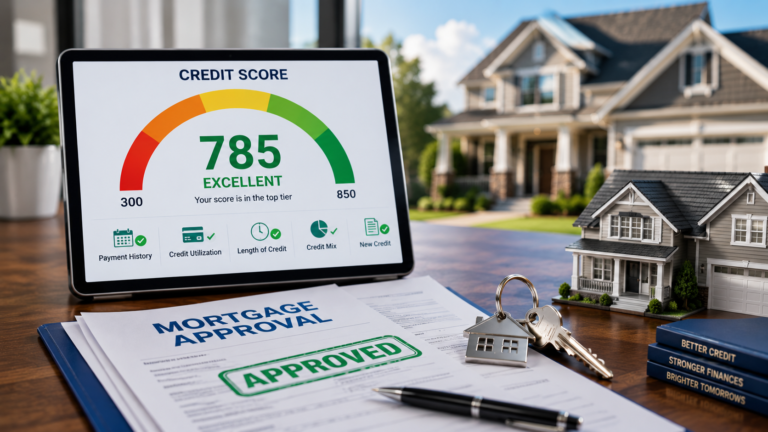
- 760+ → Excellent (Best mortgage rates)
- 740–759 → Very Good
- 700–739 → Good
- 660–699 → Fairly Good
- 620–659 → Minimum for many conventional loans
- 580+ → Often eligible for FHA loans (depending on lender requirements)
- Below 580 → Mortgage approval becomes more challenging
Although many lenders accept applicants with lower scores, borrowers with higher credit scores generally receive better loan terms and lower interest rates.
Why Your Credit Score Matters When Buying a Home
Mortgage lenders use your credit score to estimate how risky it is to lend you money.
A higher credit score suggests that you have a history of:
- Paying bills on time
- Managing debt responsibly
- Maintaining low credit utilization
- Using credit wisely over many years
Because of this, borrowers with stronger scores usually receive:
- Lower mortgage interest rates
- Better loan options
- Lower monthly payments
- Easier mortgage approval
Even improving your score by 20–40 points before applying can make a meaningful difference in your borrowing costs.
If your score isn’t high enough today, learning How to Improve Credit Score in USA before applying for a mortgage can significantly improve your chances of approval.

How Mortgage Lenders Evaluate Your Credit
Although your credit score is extremely important, lenders don’t rely on it alone.
Most mortgage lenders review:
- Your credit score
- Payment history
- Credit utilization ratio
- Debt-to-income ratio (DTI)
- Employment history
- Income stability
- Existing debts
- Down payment amount
This means someone with a slightly lower score may still qualify if the rest of their financial profile is strong.
What Is a Good Credit Score to Buy a Housefor Different Mortgage Loans
If you’re asking What Is a Good Credit Score to Buy a House, it’s important to know that there isn’t one universal credit score requirement.
Different mortgage programs have different standards, and individual lenders may also apply their own approval criteria.
Let’s look at the most common mortgage options available in the United States.
1. Conventional Loan Credit Score Requirements
A conventional loan is one of the most popular mortgage options in the United States.
Although some lenders may approve borrowers with lower scores, many conventional loans generally require a minimum credit score of around 620.
However, simply qualifying isn’t enough.
Borrowers with higher scores usually receive:
- Lower interest rates
- Better loan terms
- Lower monthly mortgage payments
- Reduced overall borrowing costs
Typical Conventional Loan Ranges
| Credit Score | Mortgage Opportunity |
|---|---|
| 760+ | Excellent rates |
| 740–759 | Very competitive rates |
| 700–739 | Good approval chances |
| 660–699 | Fair approval |
| 620–659 | Minimum qualification for many lenders |
If your score is above 740, you’re often in one of the strongest positions to negotiate competitive mortgage offers.
2. FHA Loan Credit Score Requirements
An FHA loan is designed to help borrowers who may have lower credit scores or smaller down payments.
Many lenders allow applicants with a credit score of 580 or higher to qualify for an FHA loan, provided other lending requirements are met.
Some lenders may consider lower scores with larger down payments, but policies vary.
FHA loans are especially popular among:
- First-time home buyers
- Young professionals
- Buyers with limited credit history
Because FHA loans are government-backed, they often provide more flexibility than conventional mortgages.

3. VA Loan Credit Score Requirements
VA loans are available to eligible military service members, veterans, and certain surviving spouses.
The Department of Veterans Affairs does not set a universal minimum credit score, but individual lenders typically establish their own standards.
Many VA lenders prefer applicants with scores in the 620 or higher range, though approval policies differ.
Major benefits include:
- No down payment (for many eligible borrowers)
- Competitive interest rates
- No private mortgage insurance (PMI)
4. USDA Loan Credit Score Requirements
USDA loans are intended for eligible rural and suburban home buyers.
Although requirements vary by lender, many applicants with credit scores around 640 or higher experience a smoother approval process.
USDA loans can offer:
- Low interest rates
- Zero down payment (for eligible borrowers)
- Affordable monthly payments
Which Mortgage Is Easiest to Qualify For?
If your current score isn’t ideal, many first-time buyers ask:
What Is a Good Credit Score to Buy a House if I have average credit?
Generally:
- FHA loans provide greater flexibility.
- VA loans offer excellent benefits for eligible veterans.
- USDA loans can be attractive for qualifying rural properties.
- Conventional loans usually reward borrowers with stronger credit scores through lower interest rates.
The best option depends on your financial profile, employment history, income, and loan eligibility.
What Is a Good Credit Score to Buy a House and Lower Mortgage Interest Rates
Many people think qualifying for a mortgage is the only goal.
In reality, your credit score also influences how much you’ll pay over time.
Consider two borrowers purchasing similar homes:
Borrower A
- Credit Score: 780
- Lower interest rate
- Lower monthly payment
- Less total interest paid
Borrower B
- Credit Score: 620
- Higher interest rate
- Higher monthly payment
- Greater lifetime borrowing cost
Even a modest improvement in your credit score before applying for a mortgage can reduce your interest rate and save significant money over the life of the loan.
That’s why many financial experts recommend taking time to improve your credit score before submitting a mortgage application.
If you’re still building your score, our complete guide on How to Improve Credit Score in USA explains practical strategies that may strengthen your credit profile before applying.

Can You Buy a House with a 600 Credit Score?
Yes, it is possible.
However, borrowers with scores around 600 may:
- Have fewer lender options
- Face higher mortgage interest rates
- Need a larger down payment in some situations
- Be asked for additional financial documentation
Improving your score before applying may increase both your approval chances and your long-term savings.
Can You Buy a House with a 700 Credit Score?
Absolutely.
A credit score around 700 is generally considered a strong position for many mortgage applications.
Borrowers in this range often enjoy:
- Good approval chances
- Competitive mortgage rates
- Access to multiple lending options
Increasing your score even further may unlock even better loan terms.
Credit Score Isn’t the Only Factor
Remember:
When evaluating What Is a Good Credit Score to Buy a House, lenders also consider:
- Stable income
- Employment history
- Debt-to-income ratio (DTI)
- Down payment
- Cash reserves
- Credit history length
A balanced financial profile can improve your mortgage application even if your score isn’t perfect.
How to Improve Your Credit Score Before Buying a House
If your current score isn’t high enough, don’t panic.
Many buyers successfully qualify for a mortgage after spending a few months improving their financial profile.
In fact, learning how to improve your credit score before applying for a mortgage is one of the smartest financial decisions you can make.
A higher score doesn’t just improve your approval chances—it can also qualify you for significantly lower mortgage interest rates.
1. Pay Every Bill on Time
Payment history is one of the most important factors used in both FICO® Score and VantageScore calculations.
Late payments can remain on your credit report for years and reduce your mortgage approval chances.
Before applying for a home loan:
- Pay every bill before the due date.
- Set up automatic payments.
- Use payment reminders.
- Never ignore minimum payments.
Even six months of consistent on-time payments can strengthen your credit profile.
2. Lower Your Credit Utilization
Credit utilization measures how much of your available credit you’re currently using.
Example:
Credit Limit: $10,000
Credit Card Balance: $8,000
Credit Utilization:
80%
This is considered high.
Financial experts generally recommend keeping utilization below 30%, and many borrowers aiming for the best mortgage rates try to keep it even lower.
Reducing balances is often one of the fastest ways to improve your credit score before purchasing a home.
3. Avoid Applying for New Credit Cards
Many people make a mistake by applying for multiple credit cards shortly before applying for a mortgage.
Each new application may create a hard inquiry.
Several hard inquiries within a short period may temporarily lower your score.
If you’re planning to buy a house within the next several months:
Avoid:
- New credit cards
- Personal loans
- Store financing
- Buy-now-pay-later programs
Unless absolutely necessary.
4. Review Your Credit Report Carefully
Errors are more common than many people realize.
Check for:
- Incorrect late payments
- Accounts that don’t belong to you
- Wrong balances
- Duplicate accounts
- Personal information mistakes
Correcting these issues before applying for a mortgage can improve both your credit score and your approval chances.
If you discover reporting mistakes, follow our complete guide:
5. Don’t Close Old Credit Cards
Many consumers believe closing unused credit cards automatically improves their credit.
Often, the opposite happens.
Closing older accounts may:
- Reduce your available credit.
- Increase your credit utilization ratio.
- Shorten your average credit history.
If the account has no annual fee, keeping it open may be more beneficial.
6. Keep Your Debt-to-Income Ratio Low
Mortgage lenders don’t only review your credit score.
They also evaluate your Debt-to-Income Ratio (DTI).
DTI compares:
Monthly Debt Payments
vs.
Monthly Income
Lower DTI generally improves mortgage approval chances.
Before applying:
- Pay off small debts.
- Reduce credit card balances.
- Avoid taking on new monthly payments.
How Long Does It Take to Improve Your Credit Score?
This is one of the most searched questions on Google—and it’s also one of your website’s strongest Search Console queries.
The answer depends on what’s affecting your score.
Typical Improvement Timeline
30–60 Days
- Pay down credit card balances
- Correct reporting errors
3–6 Months
- Build positive payment history
- Reduce utilization
6–12 Months
- Recover from isolated late payments
12–24 Months
- Recover from major negative events such as collections or charge-offs
The earlier you begin improving your score, the stronger your mortgage application becomes.
Can You Improve Your Credit Score by 100 Points?
Yes.
Many consumers successfully increase their score by 100 points.
However, results depend on:
- Current score
- Payment history
- Credit utilization
- Collections
- Credit age
- New credit applications
Some people see noticeable improvements within a few months, while others require longer.
Consistency is the key.
Mistakes First-Time Home Buyers Should Avoid
If you’re wondering What Is a Good Credit Score to Buy a House, avoid these common mistakes before applying.
Applying for Multiple Loans
Each unnecessary application may generate additional hard inquiries.
Missing One Payment
Even one missed payment can reduce your score significantly.
Maxing Out Credit Cards
High balances increase utilization and may lower your score.
Ignoring Credit Monitoring
Regular monitoring helps identify problems before they delay your mortgage approval.
Expert Mortgage Preparation Tips
Before applying:
 Check your credit score regularly.
Review all three credit reports.
Pay down revolving debt.
Avoid unnecessary hard inquiries.
Save for a larger down payment.
Keep stable employment.
Continue improving your credit score until your mortgage application is submitted.
Following these habits gives you a stronger financial profile and may help you qualify for better mortgage offers.
Remember
A mortgage lender wants to see responsible financial behavior—not perfection.
Even if your score isn’t excellent today, taking time to improve your credit score before buying a house can increase your approval odds and reduce the total cost of your mortgage.

Frequently Asked Questions (FAQs)
1. What Is a Good Credit Score to Buy a House?
A good credit score to buy a house is generally 700 or higher, although many lenders approve qualified borrowers with lower scores depending on the mortgage program and overall financial profile.
2. What Is the Minimum Credit Score to Buy a House?
Many conventional mortgages require around 620, while FHA loans may be available to eligible borrowers with 580 or higher, depending on lender requirements.
3. Can I Buy a House with a 600 Credit Score?
Yes.
Some lenders may approve applicants with a 600 credit score, especially through government-backed loan programs, although higher scores often qualify for better mortgage rates.
4. Is a 700 Credit Score Good for a Mortgage?
Absolutely.
A 700 credit score is generally considered strong and may help borrowers qualify for competitive mortgage interest rates and favorable loan terms.
5. Does a Higher Credit Score Lower Mortgage Interest Rates?
Yes.
Borrowers with higher credit scores often receive lower mortgage interest rates, reducing total borrowing costs over the life of the loan.
6. Can Improving My Credit Score Help Me Buy a House?
Yes.
Learning how to improve your credit score before applying can increase approval chances and may help you secure better mortgage offers.
7. How Long Does It Take to Improve a Credit Score Before Buying a Home?
Many borrowers begin seeing improvements within 30–90 days, while larger increases often require several months of responsible credit management.
8. What Else Do Mortgage Lenders Consider Besides Credit Score?
Mortgage lenders also review:
- Income
- Employment history
- Debt-to-income ratio
- Down payment
- Credit history
- Existing debts
- Overall financial stability
9. Which Mortgage Loan Is Best for Lower Credit Scores?
FHA loans are often considered one of the more flexible mortgage options for borrowers with lower credit scores, although eligibility depends on lender guidelines.
10. Should I Improve My Credit Score Before Applying for a Mortgage?
Yes.
Improving your credit score before applying can increase approval opportunities and reduce monthly mortgage payments through lower interest rates.
Final Verdict
So,
What Is a Good Credit Score to Buy a House?
The answer depends on the type of mortgage you’re applying for.
Generally speaking:
- 760+ → Excellent
- 740+ → Very Good
- 700+ → Good
- 620+ → Common minimum for many conventional mortgages
- 580+ → Often acceptable for FHA loans (subject to lender requirements)
Remember:
A mortgage lender evaluates far more than just your credit score.
Income, debt-to-income ratio, payment history, credit utilization, and employment stability all contribute to the final approval decision.
If your score isn’t quite where you want it to be today, spending a few months improving it could save you thousands of dollars over the lifetime of your mortgage.
Conclusion
Buying your dream home begins long before submitting a mortgage application.
Understanding What Is a Good Credit Score to Buy a House helps you prepare financially and avoid unnecessary surprises during the lending process.
Whether you’re applying for an FHA loan, VA loan, USDA loan, or conventional mortgage, improving your financial habits today can create better borrowing opportunities tomorrow.
The best strategy is to:
- Monitor your credit regularly.
- Pay every bill on time.
- Keep credit utilization low.
- Avoid unnecessary hard inquiries.
- Continue improving your credit score until your mortgage closes.
By following these steps, you’ll place yourself in a stronger position to qualify for the home loan you need while securing more affordable monthly payments.